"Hadestown"
27 April 2010, 22:04
| Written by Steve Lampiris
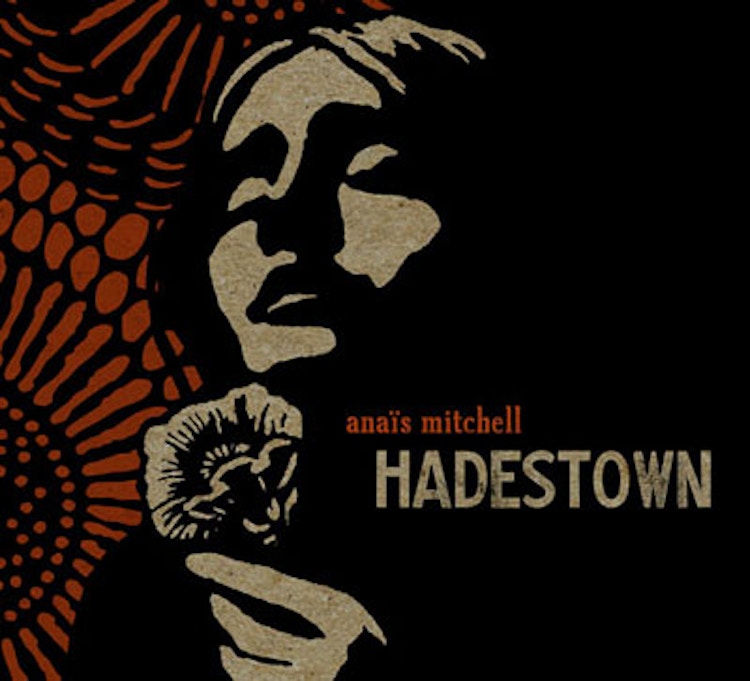
 Ugh, this is just slightly frustrating ”“ mostly in a good way. Musically, Anaïs Mitchell’s Hadestown is one hell of folk opera, a truly American take on the Orpheus and Eurydice myth. Somewhat infuriatingly, however, Hadestown asymptotically approaches the self-indulgence of The Wall. But that’s also what makes the record so damn effective. Mitchell takes every single idea she can and weaves it together into this sonic collage of gospel, ragtime, blues and a capella. Mitchell is an expert at playing god, pairing plot points with song styles and creating perfect marriages between them.But there is a glaring problem: Mitchell broke one of the most important rules of storytelling: show, don’t tell. You see, naming a song ‘Doubt Comes In’ and then having the title be the main lyric misses the point. Doubt as a concept is most effective when its very existence is in question ”“ that is, in doubt. That’s the whole key to doubt, both as a perception and as a plot device. So, stating that “doubt comes in” actually removes any question of its being and, therefore, removes its effectiveness. And that’s the one overarching issue of the record encompassed in a single song.It’s a shame, too, because Mitchell is an excellent songwriter. Her takes on folk-pop and baroque-pop is, as they say in the U.K., ace. "Wedding Song" struts along her sassy delivery, "When the Chips Are Down" and "Our Lady of the Underground" are future showstoppers on Broadway, and "Way Down Hadestown" is superb dirty brass. The album is just so much fun to spin and the 20-song, 57-minute runtime isn’t as dense as it sounds. Track runtimes range from sub-one minute to five so it digests much like a film would ”“ not every scene is the same length so, of course, songs telling a story shouldn’t be, either. The album contains a marvelous cast, as well. The ensemble includes Ani DiFranco ("Our Lady"), Greg Brown ("How Long"), and Justin Vernon (both part one and two of "Epic"). There are others, but I won’t spoil them all.I tend to enjoy films whose directors are also writers; my favorite directors are Kubrick, Tarantino, Peckinpaw and Lynch. I find that the writer/director has a better grasp of the singular artistic vision when it comes to making a piece of art ”“ they shoot and control the very words, the very ideas they created. Therefore, those types of films hold up better as creative statements. The same can be said of Anaïs Mitchell’s Hadestown. She’s more than a songwriter here: she’s an aural director, calling every shot and challenging every “actor” to go give their all both individually and as a collective. It’s the main reason that the album works as well as it does, despite its penchant for pomposity. If you enjoy Hadestown only half as much as Anaïs Mitchell obviously enjoyed making it, she’s done her job. So do yours: buy the damn thing already.
Sign up to Best Fit's Substack for regular dispatches from the world of pop culture
Read next
News
Listen
Reviews