
As he gears up for the reissue of Stakes Is High, his favourite De La Soul album, Posdnous takes Cal Cashin through the pivotal songs in his life.
All genres aside, there are very few artists that mean as much to as many as De La Soul.
Their debut 3 Feet High and Rising – a heady brew of Prince Paul’s fiercely original sample-heavy beats and the trio’s joyously charismatic bars – was an instant classic, one of hip hop’s first global-smash albums, but that was only the beginning.
With a timeless debut and its distinct, flower-powered aesthetic, the group had seemingly stumbled upon a formula for success alarmingly quickly. Audaciously charismatic rhymes over super playful, funky beats that had the same warmth as ‘60s psychedelia, with a generous helping of comedy on the side. Critics dubbed them the hippies of hip hop. But the last thing that the inventive Long Island trio wanted to do was to fit neatly into a box and joylessly churn music out to a formula.
Time and time again, De La Soul reinvented themselves – to them, transforming together was as beautiful as creating together. First, they shook things up with the state-of-the-nation De La Soul is Dead, then the oddball jazz-rap Buhloone Mindstate, before once more turning left into the era-defining Stakes Is High.
Before the core trio were Trugoy the Dove, Posdnuos, and Maseo of De La Soul, they were David, Kelvin, and Vincent at Amityville Memorial High School.
The seeds were sown when Trugoy and Pos met in elementary school. Pos had just moved out to Long Island from the Bronx, and initially became close to Trugoy’s brother Michael, before really hitting it off with Dave a little later. The duo were both musically minded and shared a fervent enthusiasm for hip hop – then, a fledgling genre that was just beginning to reach people beyond the New York City limits.
After spending some downtime experimenting with cassettes together, the rap-obsessed Trugoy and Pos brought in Mase, a schoolmate who was already spending his nights DJing and B-boying. With the magic number reached, De La Soul was born. Soon, a demo tape followed, then some shows, and eventually a debut – all before Pos, Trugoy, and Mase were old enough to drink in their home city.
The trio would go on to become one of the most influential and acclaimed rap groups of all time, but something that is crucial to the De La Soul story is that the trio’s relationships began with close friendships first. The musical partnerships came afterwards.
Speaking to Posdnuos about his life, through the songs that mean the most to him, his deep love of music is there for all to see. But so is the deep familial love he has for his bandmates in De La Soul, particularly Dave, Trugoy the Dove, who passed away in 2023 – “our life partner”, he calls him when discussing the posthumous album Cabin in the Sky, “we honour our brother with everything we do now.”
De La Soul’s most recent album was, by any standards, a tearjerker, as Pos and Mase elected to “keep Dave alive” with his posthumous contributions. It’s no surprise that the title track, “Cabin in the Sky”, is among the Nine Songs picked out by Pos. Here, it is a conduit: not only for the grief he felt losing a close creative partner, but for the joy, too, at spending a lifetime creating with a musical soulmate.
Pos’ other choice from his own work will be even less of a surprise to the real heads – to anyone that has really listened and loved to the De La Soul back catalogue. “Stakes Is High” is, for many, the defining song of a group for whom reinvention and regeneration was a way of life. The title track for that difficult fourth album – the follow-up to the fraught cult-classic third Buhloone Mindstate – is De La Soul’s “Triumph”, a defiant rap gutpunch, atop some incendiary beats by a young J Dilla.
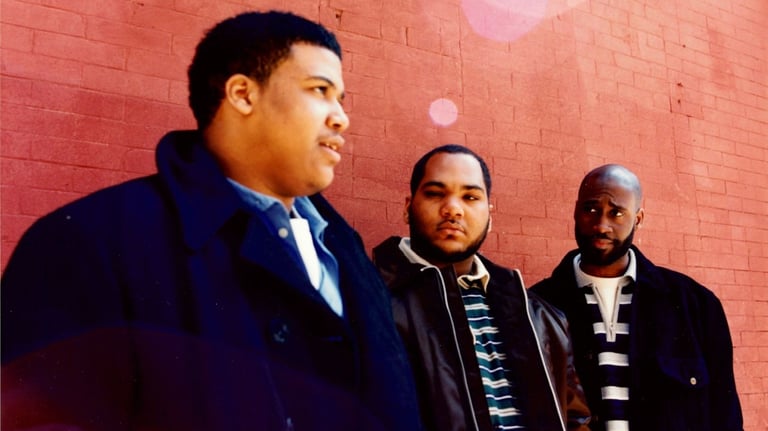
Stakes Is High at large is the album that Pos remembers most fondly – it’s his favourite of all De La’s records – for this very reason. “It was a critical point in our career,” Pos tells me. “Buhloone had come out at a weird time. Wu-Tang had just dropped, and Tribe had dropped an amazing ass album, and we didn’t know where we stood. So Dave – God bless him – felt he was too quiet on Buhloone, and he really took the driver’s seat on Stakes, and his determination allowed it to become the album it became.
“We just expressed ourselves,” Pos continues. “We had fun doing it. Stakes Is High is a beautiful album, honestly, and it’s the De La album that I can listen to from beginning to end the most.”
Elsewhere, his selections call back to very particular times and places. Often musical threads start in one decade, and maze through to the next in an unexpected way. “Three is the Magic Number”, an educational song from US kids’ TV institution Schoolhouse Rock, would later resurface as De La Soul’s mantra, while the same snare-and-kick samples that distracted teenage Pos from his high school girlfriend on “The Bridge” would go on to be a defining sound in his career.
“The Message” – as is often the case in hip hop – begins the thread that runs the longest. For Posdnuos – as with many artists of this generation, including late musical partner Trugoy – Grandmaster Flash hit “like a meteor”. This is why it’s touching – no, devastating – when you play back Cabin in the Sky. The Posdnuos-penned title track segues into the Supa Dave West-produced closer “Don’t Push Me”, which features Trugoy’s last words on record, fading to black atop heavenly harp soundscapes.
“Don’t push me over the edge,” he emotes, half-rapping, half-singing: “I’m trying…”
“I'm Still in Love With You” by Al Green
BEST FIT: You’d have been a small child when this came out. What do you remember from then?
POSDNUOS: I was just one of the kids. My parents had four sons, and I was the son that loved to hang around my father while my other brothers would be playing. I always had this natural love of music, and my father had his hi-fi system set up in our living room in the Bronx. He would mainly be playing his 45s, but he had albums too.
I was at an age where I couldn't play records, so the only time I heard music was when my father played it. Anytime he played this song, he was in such a good mood, just moving around and dancing.
My father could sing just like Al Green, and I remember – because I was so young – that I actually thought my father was Al Green. He had such a beautiful voice. Later, when I got older, I’d see him singing in the choir and stuff like that, he could hit all the high notes.
I remember that during this song especially. When my father would play it, I’d be looking at the album cover, then looking at my dad as he sings it note for note. Even at the end, when Al Green would make the noise of the train going by, my father would be nailing that. “I’m Still in Love With You” has such a place in my heart because it really connects me to my father, and my father is my superhero.
And Al Green is definitely one of those artists, what he has – to this day – is so natural. So timeless. It feels like an energy from the beginning of time. Something that will be here after we're all gone.
“Three is a Magic number” by Bob Dorough
BEST FIT: Am I right in saying this is from a TV show? Something you’d have been watching growing up?
POSDNUOS: Yes! Schoolhouse Rock! was great. They were almost like little commercials in a sense. Between a show, these Schoolhouse Rock! songs would come on these visuals. They were all cool and fun. But “Three is a Magic Number”, wow. That stood out to me so much, and I would lose my mind. The way the voice moved with the visuals, oh my God! The rabbit and the three!
I was, “Oh, I hope this Saturday they're going to play “Three.”’ And when it was like, “No, they’re playing “Nine” and I was ‘Oh, man!’
We take it for granted now that everything is on demand. My kids don’t get it. TV at this point served you a meal and left, then you’d have to come back the following week and hope that time they’d serve you what you want. Because I loved “Three…” so much, I wanted the album with all the numbers on. I said to my mother, ‘Please can you buy me this piece of vinyl?’ And then finally I didn’t have to wait until it came on TV to hear it – I could just play my record.
So years later that same record was what we wound up sampling on “The Magic Number”, my dusty, dirty record from when I was a child, because that’s how much it had incubated in me. Because I was now in a group, and it had three members, it was one of the first things I brought to the table. I tried it on this little Casio thing, put a beat with it, and the others were like, ‘This incredible.’
“Yeah,” I said. “Three is the magic number.” That’s also why it’s 3 Feet High and Rising.
Listening to the original recording, there is something pre-hip hop about his flow, isn’t there.
It did feel like that. The way it’s moving, it’s very jazzy. When I grew up, I loved realising that it was this famous jazz guy, Bob Dorough. He wasn’t a studio musician, or a singer who sang something someone else gave him, he put everything he already possessed into its craft.
It definitely influenced me later, when I was learning what I could put into flows from what was already in me.
“The Message” by Grandmaster Flash & The Furious Five
BEST FIT: This song was when a lot of people outside of New York first encountered rapping. But I want to first ask you when you first encountered rapping?
POSDNUOS: Rapping for me was early. Probably Third or Fourth Grade, after we’d moved to Long Island. I had two older brothers. My oldest brother had this friend named Martin and when he came to visit, he would bring tapes that would have these early MCs at a party rhyming. I didn’t know who it was, but I was listening so that I could impose myself on their conversations – but it sounded amazing to me.
At this point, you didn’t even think about serious stuff – you’d think, ‘Hip hop has got to be happy. You should talk about that girl.’ But “The Message” made me realise that we could talk about our lives the way that Bob Dylan was talking about his life. A light bulb went off.
It sounds like there was a real “before” and “after” this one song.
We already had rappers, but this was ground-breaking. “The Message” was like a meteor hitting this Earth. Or a satellite that was beamed into everyone who was supposed to be part of it. Anything before that was just partying, having a great time and hearing the music.
“The Message” just upgraded you immediately. You could already have heard some stuff rumbling in the Bronx on tapes, but it was the fact that it was now on your radio. The medium just officiated that it was here, it’s arrived.
I was a very happy kid, but I knew what it was to live in the Bronx. I was aware of my surroundings – I’d see the wino on the corner, and gangs setting buildings on fire, the fire trucks – and all these things that were so dysfunctional were all around me.
Grandmaster Flash was talking about this, and it showed me that you could articulate this in your music – it didn’t all have to be about having fun, having a girl, having money in your hand. He was like, ‘These are the surroundings – this is what needs to change.’
I look at my own catalogue – “Trying People”, “Millie Pulled a Pistol…”, and “I Am I Be”, and they are direct descendants of “The Message”. Telling a story that needs to be told, no matter how graphic, or not cool, it may be.
“Just Say Stet” by Stetsasonic
BEST FIT: Why did you choose “Just Say Stet”?
POSDNUOS: “Just Say Stet” is a song from the group Stetsasonic, and that group had Prince Paul as the DJ, who’s incredible. So that was it for us – we realised that we could do this.
Prince Paul was from our neighbourhood in Long Island, and he was here with all these Brooklyn guys. They could have had their pick of the litter from Brooklyn DJs, but they got Paul.
When this record came out, it was the battery in the back for any artist that lived in Amityville or East Massapequa, where I was from. We were all connected. Any artist who grew up going to Amityville High School or Amityville Junior High was like, ‘we've arrived. I can do this, because Prince Paul is doing it.’
“Just Say Stet” was a great song. It was dope. It wasn't necessarily a song that was like, say, “It's Like That” by Run DMC, where it travelled way outside of New York. But it meant everything to us from this neighbourhood.
Beautiful. So did you know Paul from the very start?
He was – I would say – two grades ahead of me. Dave [Trugoy the Dove] was a grade ahead of me, and I think Paul was a grade ahead of him. I knew Paul from afar. I would see him in school. Beyond just being cool, he was a really nice person, you gathered that from him immediately. At first, he was DJ Paul, and at first I didn’t realise that DJ Paul was the Paul from two grades above.
It just so happened that the first person I met when I went to the school was a girl called Regina Peters. A few years later, when DJ Paul was working his way up to being a local superstar, she had a basement party and told me her cousin Paul was going to DJ for it. I went and it was DJ Paul! I was like ‘DJ Paul is your cousin?!’
I had my first true talks with him later. Mase [Maseo] had come in on the DJ thing too, and you’d see his name on the same line-up as Paul, and so he made the introduction. He became this incredible person.
“The Bridge” by MC Shan
BEST FIT: What is it about “The Bridge”? And which bridge is “The Bridge”?
POSDNUOS: “The Bridge” in question is Queensbridge. What’s so amazing and special about this one for me though is the sampling. It wasn’t the first record that had sampling – I’d heard the Malcolm McLaren’s The World’s Famous Supreme Team, where they sampled Cerrone’s “Rocket in My Pocket”, and Yes’ “Owner of a Lonely Heart” where they sampled Funk Inc.’s “Kool is Back”. But most things were 808 drum machines, and a rapper scratching over them.
“The Bridge” was one of the first hip hop records to switch the kick and snare from “Impeach the President”. I remember listening to Marley Marl on the radio, and he played the instrumental to this. I said, ‘That’s so amazing. How’s he doing that? This is not a drum machine.’
I remember thinking that when we got around to putting out records, we’ll also have to use this process – sampling – to take the actual kicks and snares from records.
A few months later, I was at my girlfriend’s house, and we were downstairs trying to kiss without our parents seeing us. I’ve got the radio on and he premiered this song, “The Bridge”. I literally stopped kissing. I’m like, ‘It’s that song!’
‘What song? What are you talking about?’ she said.
‘It’s that song. This is the song. It’s that instrumental that Marley Marl played months ago, and now MC Shan is rhyming on it!’
“Nobody Beat the Biz” by Biz Markie
BEST FIT: Hell yeah. So moving onto “Nobody Beats the Biz”. Biz was a… big character. When did you first come across him?
POSDNUOS: Biz was a guy we knew before the records, Biz would just come up to our school. He would go to all the different high schools and hand out flyers. He’d invite the kids from surrounding high schools to come to his college parties at Westbury College, and he’d be one of the MCs there.
Our school principal was a typical, mean principal. He didn't allow you to do certain things. He was very strict, having people come up to our school that didn't even belong there was a big no. But Biz had this way about him that allowed him to actually walk up into our school and hand out flyers.
When he started making records, we were like, ‘wow, that's Biz! Biz who comes up to the school to beatbox and hand out flyers! He actually got a record out.’
When this record came out, it was another one that helped us as De Le understand that you too can do something so creative with your own hip hop, and it can still be appreciated by your fellow man. At first hip hop had these rules, and they may not have been written but they were followed. Maybe you can rhyme about girls, maybe you can rhyme about partying.
But Biz rhymed about the hood, and, importantly, he had a confidence about himself that showed you could be funny but still be respected. Amazingly hilarious. By the time we got to making 3 Feet High and Rising, we knew that we could be fun guys and still make great records.
Also, on “Nobody Beats the Biz”, he’s rhyming all over this Steve Miller record “Fly Like an Eagle”. It made you feel comfortable in the fact that you could rhyme over all the records you’d find in your house. We didn’t have to just rhyme over James Brown records – I could make a record out of a song by Steely Dan! We can do whatever we want, because we’ve seen it done.
“Keep On Movin'” by Soul II Soul
BEST FIT: I didn’t expect you to choose anything from Britain, I’ll be honest. When did you come across Soul II Soul for the first time?
POSDNUOS: I came across this from our early days travelling overseas. London immediately became one of those places that we fell in love with. It had similar workings to New York, a built-in scene.
Somehow we got a demo from Soul II Soul, and we were just floored. We listened to it front to back, back-to-back. I can’t explain it any other way – it was just a ray of sunshine. It was almost mystifying too, we couldn’t work out exactly who was in the group. Jazzie B, sure, but who’s this person? And who’s that?
With “Keep On Movin’” in particular, you just felt it in your ears. You can hear Bill Withers’ “Lovely Day”, Roy Ayers’ “Everybody Loves the Sunshine”. It really had a ray of light in it. It felt so beautiful.
I’d get a tear in my eye hearing the way that Caron Wheeler was singing. I can see us now: we’d be in the van, running around, doing all the press for 3 Feet High and Rising, and the whole time we’d be listening to this and singing. And this was obviously pre-Internet, so the whole time we were on tour we couldn’t wait to get back home to show everyone.
Obviously, it’s such a lovely record, and it was so great to hear that we were obviously so attached to soul music. Back home, where it was all R&B, it was getting away from that gospel feeling… but Soul II Soul really had that.
“Stakes Is High” by De La Soul
BEST FIT: I want to start with a question that’s maybe not so serious before we get to the heavy parts. How did you decide who’d be on the mechanical bull in the video?
POSDNUOS: I knew for a fact I didn’t want to do the bull! I think the director already had Dave down for it, but I had no qualms about it – I knew I was not getting on that thing. We wanted the video to be full of everyday things, and the director agreed, but he wanted to put some outrageous, funny things in there too, hence the mechanical bull in Times Square.
So pre-mechanical bull, where were you all at, mentally, making Stakes Is High?
That’s what’s so important about this song to me. Stakes Is High is so special to all of us because of where our lives were at the time – we were fathers, so even beyond maintaining our own careers for ourselves, we felt like we needed it for our kids. We wanted for them to not suffer from what we saw going on around the world.
The last album, Buhloone, didn’t do that well. I got sick while we were on the Japan leg of the tour too, I got spinal meningitis. Too sick to do a video for “I Am I Be”, which stalled it even more.
And the whole time, we were on tour with A Tribe Called Quest, as well as The Pharcyde, and Tribe had just released Midnight Marauders. They just hit it out of the park, whereas Buhloone is one of those albums that you do have to embrace, and give a little bit of time to, to let it in.
So when it came to doing the Stakes Is High album, I wasn’t sure where we were at, even as a person that loved music and believed in my group. I felt like we could weather it, but Dave was more serious. ‘Yo man,’ he’d say. ‘Should we still even be making music? Do people even care what we’re doing?’ I didn’t necessarily feel that way, but I listened to what he was saying. He felt he was too quiet on a lot of things when it came to Buhloone, so this was the album where he really took the driver’s seat.
We had the album title, and we knew we were going to have a title track. I put something together, and started making these rhymes, but something wasn’t quite there. I knew I’d know it if I heard it – we needed something that felt like God coming out of the sky with commandments, or something.
When I heard the Dilla beat, I just knew. I called Dave up right away, and the rest is history.
Dilla is a massive figure now, but when Stakes Is High came out he was only 22, still relatively unknown and living in Detroit. How did you come across him?
He was Jay Dee then. We were touring with Q-Tip, who’d been given a tape – I think – on a tour with Amp Fiddler, and he was passed a Slum Village tape. Tip brought it on our tour and he kept playing it. ‘Yo,’ he’d say, ‘This producer is crazy, right?’ He kept loving and loving each beat. Tip met him when the tour got to Detroit, and then they were locked in.
Through Q-Tip, we’d hear all these different cassettes that were just Dilla’s stuff. Stuff he was doing with a group and stuff he was doing on his own. Tip would always announce when he’d been sent more, and one of these cassettes was where I heard the music that would become “Stakes Is High”.
“Cabin In The Sky” by De La Soul
BEST FIT: I think this choice speaks for itself. But tell me about “Cabin in the Sky”, Pos.
POSDNUOS: “Cabin in the Sky” is about Dave. The thoughts you have when you lose someone, you’re already broken into pieces because you’ve lost someone that you realise kept you whole. This person has been our partner since before De La Soul – since Fourth Grade.
So you lose this person, and then you start looking at your own mortality. What happens when I lose myself? What happens when my family loses me? What happens when I transcend to wherever I may go? So that’s it. That’s “Cabin in the Sky”. It was easy to write, too. Once I found the title – to the song and the album – from a movie – I knew that was it.
When it came to writing those words, they poured out so easily, while tears were pouring out my eyes. I wrote it very quickly and only modified a few things after. It’s the perfect representation of where we are now – honouring our brother with everything we’re doing now – as artists.
It’s a direct love letter and a ‘how we miss you’ to Dave – that song is just tears. We showed it to people and they were like, ‘is this a joke? What are you trying to do, man? We’re grown men out here and you’ve got us crying.’
“Cabin in the Sky” is very special, and then “Don’t Push Me” follows it on the album – that track’s just Dave, because I thought it would be so good for Dave to end the album. We end the album with it sounding like he’s in heaven in the studio, and then when it fades away, it’s like us going back down to Earth.
Stakes Is High (30th Anniversary Edition) expanded to include alternate remixes, instrumental versions of the complete album, and additional rare cuts is out on 23 October via A.O.I. Records, distributed by Chrysalis. You can pre-order it here.
Sign up to Best Fit's Substack for regular dispatches from the world of pop culture