
There is nothing wrong with Big Red
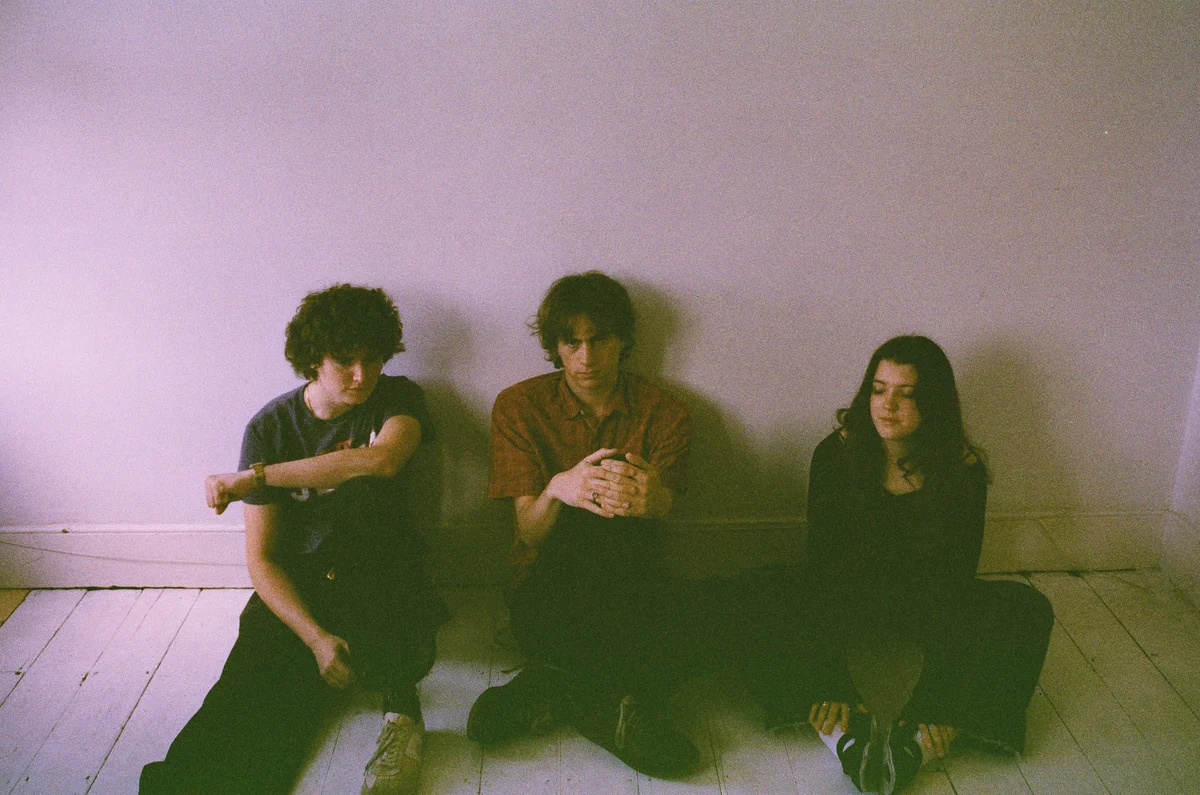
Big Red is the streamlined, country-flirting side quest of The Orchestra (For Now)’s Joe Scarisbrick, whose new album emerged from a radically analogue, whirlwind writing process – sometimes high above the clouds – as he tells Sophie Jarvis.
None of us is the same in every room.
Not through lack of virtue, or because the lifelong preachings of being yourself have fallen on deaf ears, but because growing up means learning that being yourself looks different depending on who you’re with. Conversations with your boss are far cries from chats with your friends at the pub, which bear little resemblance to the natters at the dinner table with the in-laws. Little adjustments here, omissions there, lovely weather we’re having, right? But there’s a fine line between wearing different hats and making yourself smaller to fit them, and lately, Joe Scarisbrick has been thinking about what gets left behind in those edits.
The driving force behind The Orchestra (For Now), the seven-piece maximalist ensemble at the heart of the Windmill scene, Scarisbrick is no stranger to the tensions of intricacy and excess. But with Big Red, a close-knit side project formed with two of his Orchestra bandmates, he is seeing how much he can strip back without holding back: fewer moving parts, a different approach to songwriting, and room to try on another hat. And on that note, when I call him on a sunny Tuesday afternoon, he is in the middle of his shift at a flower stall.
“We all have to wear different hats. When I’m selling flowers, I’m not a member of Big Red. I have to play characters. But curation is magnified in music making, and I realised that a lot of us do it in our everyday lives,” he says. “I realised I was omitting tiny little details about myself, even from friends, which is a very narcissistic thing to do. People often present an overly positive or an overly negative view of themselves, and I think it would be better if everyone was a bit more direct. And it’s not the best, most novel realisation of all time, but it felt important for the record to make sense.”
Big Sur, the trio’s debut album, abandons Orchestra’s maximalism, stripping away the flesh of elaborate time signatures and relentless rhythms without compromising a body of emotional candour. Behind its fevered, Loveless-adjacent cover, it draws on a deconstructed strain of Americana, fizzing the elusive and the mythologised to the surface across ten tracks that balance art-rock chaos with plainspoken storytelling. “There’s a lot less pageantry, which obviously comes from the instruments themselves,” Scarisbrick says. “There isn’t a reliance on crazy ideas. It’s like, here it is: this is the sound of the guitar, this is the sound of the drums, this is the sound of the bass.”
Scarisbrick is the guitar, Charlie Hancock the drums, and Millie Kirby the bass. Having taken up the instrument a few years after receiving one as an 18th birthday present, he began writing songs for guitar, only to find that Orchestra weren’t into them. “They weren’t very much liked. I think it was sort of, stay in your own lane; you’re best at writing on piano, which is completely fair enough. But I still wanted to do something with them. I was like, fuck it, I’ll make an album. Big Red kind of came by accident.”

Equal parts accidental and instinctive, Scarisbrick’s approach to writing is as vulnerable as it is unceremonious; he works in fits and starts, uninterested in dwelling on every passing idea and instead trusting the ones that stick. “I work very sporadically and in quite extreme bursts. I’m not some sort of Lynchian extremist. I’m not following his hypotheses on creativity and eating the same sandwich every day or whatever, but I do believe that different ideas are something you can never control,” he says. He purposely doesn’t record his ideas, regardless of how strong he or his bandmates think they are, and even finds music inspiration in his dreams – “which I’m hesitant to say, because people either don’t believe you or they think you’re a twat. And that’s not a great place to be. But I’m a big believer that if you don’t remember something after two weeks, then it’s bad.”
For the songs that survived the fortnight, Big Red began as a home for them to live, but ultimately spiralled into a haven for saying things differently. A lover of country music, Scarisbrick had been soaking up the twangs of George Jones, Johnny Paycheck, and Dolly Parton as well as revelling in the country diss-track folklore of Hank Thompson and Kitty Wells. Though country sound doesn’t bleed into the instrumentation of Big Sur, its directness and imagery sit at the heart of the record: an active decision.
“When you’re not relying on loads of flourishes and stuff, you have to support the music with good storytelling and the lyrics have to be impactful. As well, a lot of country music draws on places, which is really important,” he gushes, “like a bar or a farm or the street, and that to me was super interesting as opposed to what I was doing, which was like, how clever can I be with references and shit? But Big Sur is very much: we’re on a street, we’re in a car, we’re going somewhere, we’re doing something.”
It’s fitting, then, that Big Sur was moulded by its own globetrotting, written between the coastal sprawl of Santa Cruz and the bustle of London before being recorded live on the Devon coast last spring. But why did it travel between so many places, I ask?
“I was bound up in a transatlantic love affair,” he says. “I got to spend a lot of time in America and I blew all of my money, and when I was in California, I had a guitar there. I spent a lot of time perfecting my parts and the stretches of the songs, and then on the plane rides I did a lot of writing. I go through stages of sobriety and intense non-sobriety, and early last year, I was very much not-drinking, do-nothing, and I spent a lot of time sat in my room at night. I was just yearning for going out and having fun with friends and stuff, but I was also being very regimented and wanting to stay in and not spend money and save up to go to America. It was just by the nature of the record happening over that period and it obviously seeps in. I tried to make the record not about that experience too much, apart from the last song, which just had to be on this record.”
“Lost (And Found)” resigns the album in a maelstrom of unguarded confession, Scarisbrick’s vocals roughening towards a nervous breakdown as plucked guitars give way to thunderous, frantic drum clashes. The lyrics were written thousands of feet above the Atlantic, sitting beside a Canadian woman who had requested Scarisbrick wake her if the Northern Lights appeared. When they did – and the most “pristine, amazing, gorgeous” ones at that – he forgot to wake her, then lied that they hadn’t appeared. After the pilot announced, upon landing, that it was the best display he’d seen in 25 years of flying, the woman, who had noticed Scarisbrick’s writing on his tray table, peered over his shoulder, gestured at his lyrics, and said, “There is something severely wrong with you.”
Listen closely and you can hear Hancock and Scarisbrick crying as the seven-and-a-half minute track draws to a close, both the final notes of Big Sur and a testament to its creation. “It really was just three close friends in a room pressing record. Of course we’re going to be giggling or crying or being incredibly earnest with each other. And I guess with a lot of records – even with The Orchestra – those imperfections could be considered blemishes. But I wanted to make sure they existed because it felt really honest. And at the end of ‘Lost (and Found)’ we were crying, but in a few of the other songs you can hear us laughing. Recording was a very free space to react as you wanted to.”
The record was made over three days, with 14 songs recorded and four left behind – alongside a 200-year old antique table that Scarisbrick jumped on in pure elation and accidentally destroyed when the sessions wrapped up (“nearly died”). Save for the odd overdub and redo, the performances were left untouched, the liveliness of the room preserved. “The classic thing on this record is that the choruses have double-track guitars, and that’s it. It’s literally just two guitars on each chorus, normally, and there’s a cowbell at one point.”

“Isn’t He Funny?”, Big Sur’s chief pulsing commentary on editing yourself as a musician, was recorded without a click track. “There is barely any editing, apart from really egregious things, like if I shouted ‘Fuck!’ or something by accident when I messed up. We got rid of those.”
Across Big Sur, Scarisbrick’s vocals are laid bare, beautifully twisting and turning from growling breathlessness to soft croons; regardless of whether the rhythm cradles them neatly, Kirby’s stunningly tender harmonies nestle into the frenzy. “Mission St” sits as one of the propulsive standouts, its relentless momentum blanketing a sharp, vulnerable undercurrent. He gasps and whines, “Don’t leave / Oh, brother / Don’t leave,” clawing back to his school years.
On paper, it was a good state school, but there was an unsavoury underbelly, he tells me, without referring to specifics. “A lot of my friends, who I’m not in touch with anymore, really suffered mentally from that. I basically just thought it was time to address it. I think I’m still quite scared about it, because at one point these people were my closest friends, and now I don’t know what they’re up to. ‘Mission St’ was like a cry-out. You have this level of guilt – what was different about me that meant I didn’t suffer in the same way? I don’t know; it’s such a big fucking topic.”
For all the muddy personal ground Big Sur covers – and starts to uncover – it stands as a record not conflating confrontation with resolution. “It’s something I want to address properly in the future,” he says. “This was the first step to get there.” With more songs to finish and another record waiting in the wings – maybe even an anthology album or a surprise drop with no singles or campaigns, he brainstorms – Big Red have no shortage of loose ends to untangle, and nor any particular rush.
“I didn’t want to control the final product too much, because it was never meant to be a perfect studio record. It was meant to showcase three friends playing music that they love,” he says. “Big Red is big, angry shit. But then in the day I sell flowers.”
Sign up to Best Fit's Substack for regular dispatches from the world of pop culture