
The Cindys and the craft of writing a good pop song
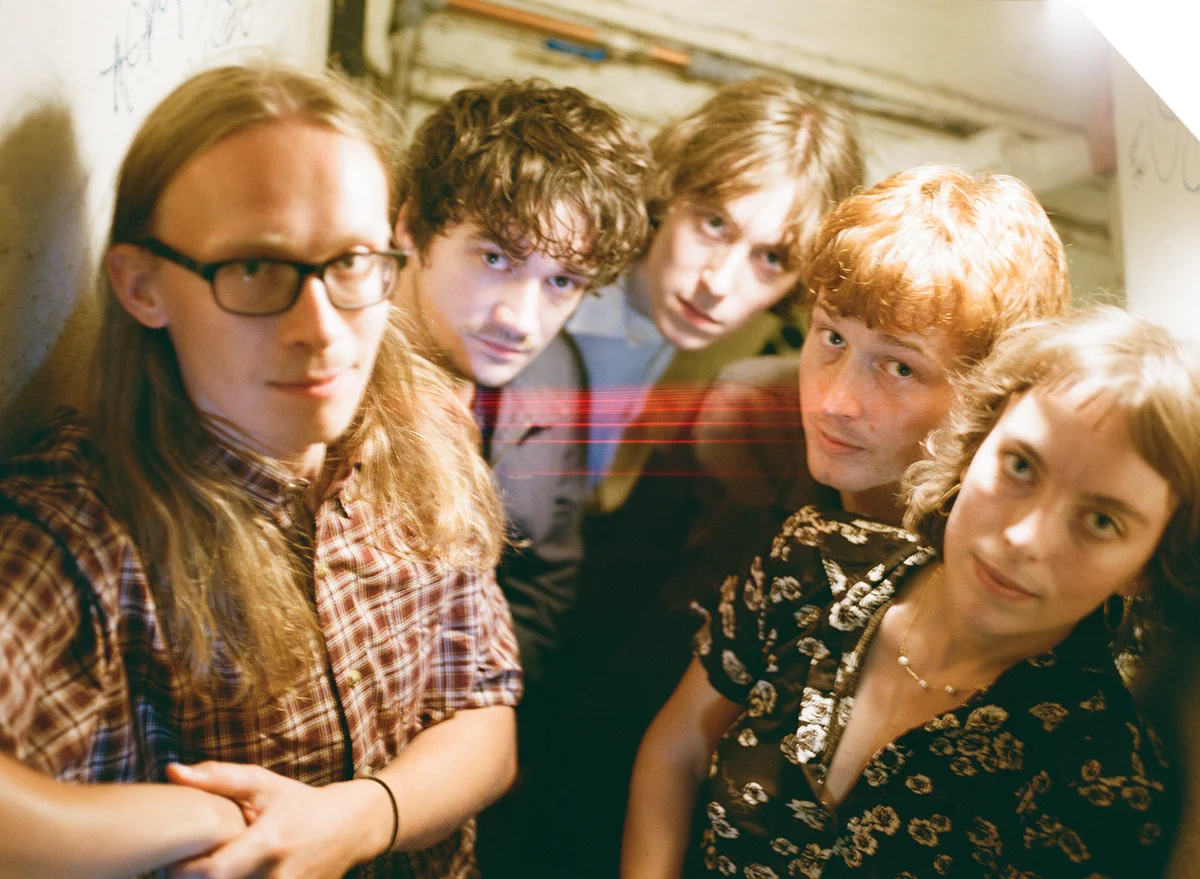
Moving away from dissonance to something direct, melodic, and indebted to ’80s jangle bands that mostly begin with ‘The’, Jack Ogborne’s new project The Cindys meet John Bell in Bristol to discuss the baptism-of-fire approach to their debut album.
“No more break up songs,” sings Jack Ogborne between the warm, crashing chords that open The Cindys’ debut album, Love Century.
It’s not the first time such a declaration has been made, and it won’t be the last, but for the Bristol band it serves as a manifesto of sorts: one that speaks to love, the satisfaction of collaboration, and a headlong jolt towards joy.
“It felt like a bold opening,” Ogborne reflects over a pint in Bristol’s famed King Street. “Starting a new chapter. It felt like a statement of moving forward.” To fresh ears, the easy-going autumnal feel of the album’s opening title track – all crisp guitar tones and lush, harmonised ahs – might hardly sound audacious, but context is important. Before The Cindys began to take shape in 2024, Ogborne had started to gain traction as Bingo Fury, in which his trademark baritone voice hovered heavily above arrangements somewhere between jazz and post-punk, sometimes sparse and brooding, at others busy and dissonant. “His intention is to toy with the expectations of the listener,” wrote The Guardian’s Orla Foster around the release of his debut, Bats Feet For A Window, in 2024, “defamiliarising their idea of what a song might be.”
Ogborne had another Bingo Fury album lined up to record with This Heat’s Charles Hayward, one of his musical heroes, but something wasn’t quite right: “It just stopped being this thing that made me tick, in a way.” Instead, he found himself drifting towards a softer, simpler style of music writing that reflected much of his listening habits: Flying Nun-esque ’80s jangle and power pop bands that mostly begin with ‘The’.
Almost in defiance of Foster’s portrayal of his writing style, Ogborne began moving away from dissonance to something direct, something “resonating with melody and tenderness, rather than an aggression,” he says. “It also just didn’t feel like a daring thing to do. The daring thing to do felt like not to hide behind abstract music. It was to try and earnestly write pop songs.”
To help, he recruited a rhythm section of Ewan Fergusson on drums and Isaac Green on bass, two members of the energetic Bristol band Belishas who had been friends and musical partners since childhood. They join us at the pub, and Fergusson describes a shared vision for Love Century from the off. “I think it helps that all of us are fans of the craft of writing a good pop song. There was no doubt in the idea. It felt very fully formed – at least in the mind – before we even recorded a single track. It felt completely self-actualised before we played.”
“Inherently in the songwriting it feels apparent what the objective is,” Ogborne agrees. “Hearing it is like, this just really wants to hit.”

Returning briefly to those early songs written as a trio, which would make up The Cindys’ self-titled release in 2025 (at the time it was called an album, now a mixtape), it’s almost as if you can hear Ogborne’s past venture reshaping in real time. Two songs originally meant for Bingo Fury actually appear on the release, “Marble Lobby” and “Dish Water”, which both retain that smoky, almost eerie quality. There’s even a suggestion of something chaotic and tense on “Isaac’s Body” before the rest of the band carries it away.
With Ogborne’s voice not exactly typical of the power pop songs they were writing, the addition of Finlay Burrows immediately brought a new dynamic to The Cindys. Friends since they were 18, the pair would always be the first to know whenever the other joined a new band. Burrows’ voice provides a bright and brittle counterpart to the moody resonance of his old pal, and even takes the lead on “I Can’t See You”, a charming bittersweet number with simple chords separated by the glistening arpeggios that make up much of Love Century.
But key to the balance of these two voices is the folk artist Naima Bock, whose own versatile range acts like a glue, adding a feeling of depth and completeness to The Cindys’ sound. Except for the lullaby-like “Baby’s On The Page”, where Bock’s falsetto leads a verse, her harmonies are often sparse and subtle, never eager to overdo it but satisfying when they kick in – perhaps best on the closing “Cornish Rock”. Bock and Ogborne are musical and romantic partners, and the latter long knew what she could add. “Especially for a jangly, poppy band, it’s quite a weird combination of voices,” he says. “I always feel like my voice is too deep for this kind of music, and having her voice is so good at anchoring a melody in this almost woodwind way.”
Love Century is, then, the first true Cindys record. Recorded at the world-famous Rockfield Studios in the Wye Valley and released on Bristol’s Breakfast Records, it is the product of each adding their own colour to a communal aim for direct, succinct pop songwriting. Of course, the practicalities of becoming a five-member band with their own other commitments – Bock has just announced a new album and tour for 2027 – has also helped to enforce this principle. While Ogborne had a tendency to get “neurotic” when writing for himself, The Cindys mostly only get to rehearse and write in soundchecks or remotely. “All of these songs have had that baptism of fire process,” Ogborne says. “They’ve all had the same treatment.”
Perhaps the best example of this is “Town of Origin”, a song written in half an hour but by far Love Century’s biggest earworm. Led by a hook you’re sure you’ve known most of your life, the track has a kind of coming-of-age comfort to it; not even three minutes of jangly nostalgia that just, well, really wants to hit.
The warm and refined familiarity of “Town of Origin” will surely be at the heart of Love Century’s appeal. The Cindys have a clear way of working and plan to release an album a year, but how do they hope others will receive them? “We’re writing it to be satisfying to play and to watch. If we’re able to create a cathartic or joyful experience for someone, that feels like a precious thing.”
Sign up to Best Fit's Substack for regular dispatches from the world of pop culture