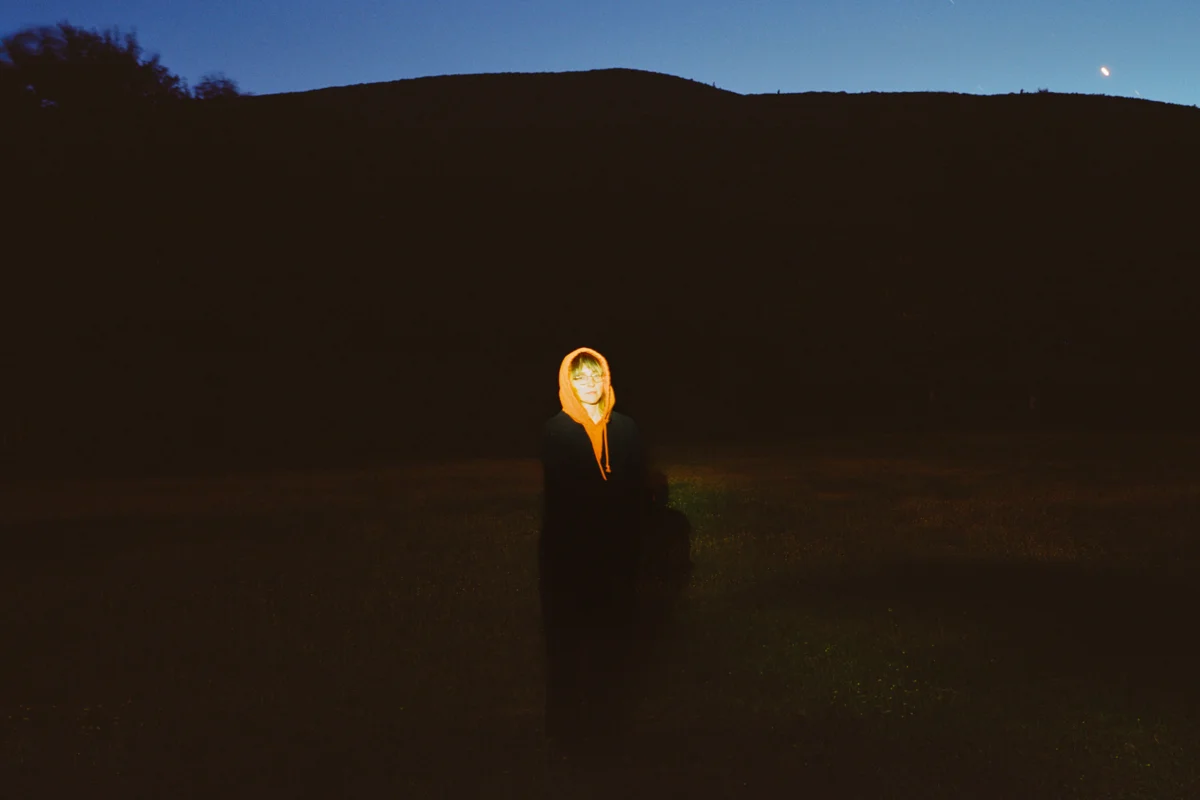

Reference Points: Emily A. Sprague
Emily A. Sprague tells Alan Pedder how pairing her two modes of musical expression took shape in Cyano, a transmission from the edge of the known.
In botanical terms, a graft is neither one plant nor exactly two.
The process of combining a sturdy rootstock with a cutting from another plant to help it grow dates back to ancient Greece, where it was used to propagate fruit trees and canonise a favoured taste or shape. But, to quote cinema’s most objectified mathematician, life (uh) finds a way, and sometimes what grows instead is a curious third thing, a graft chimera, like the wonderful bizzarria, a Florentine fruit tree that bears both sour oranges and citrons, and something in between.
There’s something chimeric about Cyano, too. Emily A. Sprague’s newest work doesn’t fall fully into the realms of the experimental practice of her ambient albums like Water Memory, Mount Vision, or Hill, Flower, Fog. Nor does it fit the melodic songwriting mould of her band Florist and their detailed, intimate folk songs. Those modes are recognisable here among the album’s patient, open-ended textures, but Cyano has its own discrete vocabulary too, expressed through modular synth work, voice, and field recordings from a winter solstice spent in rural Iceland.
Both diaristic and expansive, discovered and composed, Cyano is the outcome of years of careful work, trying to unite in some way her songwriting and instrumental sides. “I’ve been thinking of it as putting two different parts of myself in the same room and seeing what happens when they meet and have a conversation,” Sprague tells BEST FIT from her home in California, where she lives with her partner V Haddad, a photographer and filmmaker. “It definitely feels like a new chapter.”
Like any two strangers pulled out of their comfort zones and urged to get along, she admits that things were at first a little awkward and continued to feel odd “for a really long time.” “I went back and forth on it, feeling like those two sides of me would always be kind of separate, but finally something clicked and here we are.”
Conceptually speaking, “here” is the distant planet of Cyano, an imaginary, once Earth-like sphere now inhospitably barren in the wake of ecological and societal collapse. Press materials describe the destruction as the outcome of a forced “pseudo-mutuality” and “assimilated symbiosis,” where individual thought and care have been gradually juiced out of its human population, replaced with cold, extractive groupthink. The story, then, is finding a way back to empathy, led by a character that Sprague sees partly as an extension of herself.
“It’s a really personal record, which I guess is a funny thing to say about music because I think it’s all really personal for artists,” she explains. “The character, for me, is like a reflecting pool of my own relationship to myself and how it feels to be in transformation through different stages of life, and getting to learn more about those parts of yourself that feel a little estranged.”
Drawing on her lifelong love of science fiction – see also Florist’s “Sci-fi Silence”, with its Star Trek-inspired video by Haddad – and her recent interest in the cyanotype work of 19th century botanist and photographer Anna Atkins, Sprague’s vision of the project was already forming by the time she and Haddad made their trip to Iceland, back in 2019.
“I felt a really intense energy out there, between the extreme darkness and extreme beauty,” she explains, recalling how watching the night skies over the fjord shimmer with aurora reframed her perspective on scale and space. “And I drew a lot of inspiration from that, because the world of Cyano exists in a sort of vacuum that similarly has very little going on, on the surface, but it's like the belly of the beast, in a way.”

Documenting the trip through photography, writing, and recording with a handheld ZOOM, her trusty OP-1 original, and a Monome Norms on which she ran a script called MLR, “a really fun, really playful, intuitive live sampler,” Sprague kept everything and would continually revisit the material and its attached emotions throughout the slow process of pulling Cyano together.
Taking us deeper into the pocket of themes and inspirations she explores in Cyano, Sprague describes a creative practice built on accumulation – of photos, objects, memories – and attention over clarity, trusting that obliqueness can also hit just right. “The sonic palette was inspired by many imagined worlds that have been written throughout human history, worlds that mirror our own but make us think differently, want to escape to them, of fear them,” she says.
“I wanted to try and create something overall that felt familiar but still somewhat alien.”
Ephemera passed down through generations
BEST Fit: You’ve described being drawn to photographs and handmade objects partly because dust, wear, and imperfection become evidence of the lives they’ve passed through. Do you think of Cyano as a similar kind of artefact, something that might carry your own essence into the future?
EMILY A. SPRAGUE: Yeah, I do think of it that way. I think of it as a little document about the personal experience of making the record for me, which was very much a time in my life where a lot was changing. I was exploring this new way of working, and choosing to share that and document that is something that I really believe in – not just with Cyano but with my work and with my art practice in general.
I really love sharing things, even if they are just part of the process, and normalising that kind of vulnerability I think is important. I wanted the record itself to sound like a transmission coming from a specific time and place, similar to a postcard or a handwritten letter that you might have kept from a family member or a friend. Something that can evoke a sense of time, and also change.
Do you have any specific examples of what you were thinking about in terms of objects and pictures?
I’m a huge collector of things. I have so many bits all over my house from various journeys. I have receipts for things and handwritten notes from friends of mine, going back 15 years or more. I have paintings that my mum made when she was around my age. I have letters from my partner from when we started dating.
I really cherish all these objects and I have a sensitivity towards them. Thinking about the things that I’ve held onto, and have little shrines around my house for, reminds me of the passage of time and how the journey is what it’s all about.
What's the strangest thing that you collect?
I don't know if any of it is necessarily strange. I collect a lot of natural objects, which I think is common, but it’s maybe strange in the sense that I could go anywhere and be attracted to a little stone or something. My dad is similar. He'll see a perfect leaf while out walking his dog and show me, like, "Look at this leaf I found,” and I'll be like, "Yeah, that's really good.”
Have you always been interested the aesthetics of imperfection? Or is it something that you've grown into lately?
I remember finding a book on wabi sabi in the library when I was young and finding it so beautiful and interesting.
When I started getting into art and music and my creative practices when I was a teenager, not necessarily understanding what it all meant at the time, I was drawn to that kind of stuff because I felt very imperfect as a person. I felt very odd, like I didn’t fit into the world around me, so I was drawn to creativity not to find perfection or to create to some ideal, but really to honour the truth that I felt in the world.
These days, I don’t really have positive or negative labels for imperfection, because what exists in this world naturally is already perfect. I’m just trying to appreciate things as they are.
Analogue photography and printmaking
BEST FIT: The name Cyano of course relates to Anna Atkins and the photographic process of cyanotype. How does that relate to your compositional approach?
EMILY A. SPRAGUE: I’ve always felt like a minimalist when it comes to my setup and how many tracks I like to work with. For me, keeping things simple is usually more inspiring than complicating things unnecessarily.
Cyanotype is such a beautifully simple image-making and printmaking process. It uses sunlight to print an image, and that really resonated with the way that I was relating to this work. The product is a beautiful document but also kind of vague, because you can only get so much detail out of cyanotypes, and that’s part of their charm.
For me, it’s also really tied into the ephemera idea, to impermanence and the process of documenting things. To the past and the things that we hold onto.
My photography practice has been a part of my life since I was young. Over the years I’ve experimented with developing and printing my own film, and I have made a lot of my own cyanotypes. I really like the process of collaborating with reality, and I like to try and pull music from that space as well.
Feeling is a big part of the photographic process, for me, and the same goes for music. Both start with getting a feeling from something and following the thread of that feeling to see what develops.
You’ve said that the organic interaction that creates a cyanotype inspired your sound design process, and that you were looking for organic feeling sounds and textures in otherwise digital instruments. What does organic mean to you sonically? What are the qualities of that?
It’s a little rough around the edges, I guess.
With Cyano, I imagined quite a dusty, organic world, and part of the sound design process was to think about wood and rock, dirt and air, water and lava, and what all that stuff feels like, and what they sound like when they’re interacting with other materials. I wanted to imagine sounds that aren’t necessarily meant to emulate or sound like they come from these pillars of our organic world, just evoke them a bit.
My sound design process was not that complicated for a lot of the sounds. Cyano is the first album I’ve made that’s almost entirely done using modular synths. There are a couple of tiny little sounds that are overdubs with other synths, but it’s 99% modular.
It’s also the first album I’ve made where I’ve set up a synth to be able to recall patches, so it wasn’t completely ephemeral. There are a lot of sounds that I’ve been able to get back.
Working with modular synths is usually a very impermanent process, but I meant for the melodies on Cyano to not just be improvised. Looking over at my synths now, I’m able to recall how the sounds and melodies took shape, and how the tones could really change the feeling of the timbre.
Minimalism and not overthinking things
EMILY A. SPRAGUE: Making this record was an experience of trusting my inner voice, my impulses, and my intuition with the kind of expression that was feeling true to me at the time of making it. I really believe in the vulnerability of art and try to lead with that in whatever it is I am making and sharing. I try to put something into the world that reflects what I most like to see in the world – work that is not afraid to be true to itself.
I had recorded a few other versions of the idea I had for this album. Not exactly Cyano, but it was something that I’ve been chasing for a little while. I’d been searching within my practice for something that would end up feeling right. Then, at a certain point, I found myself feeling like I was a bit too attached to needing to get to a certain level of perfection, or a completeness that was exactly the way I had imagined it at the start.
In the end, what led to me finishing this project and accepting it for what it became is that I stopped overthinking it. I got a real sense of wanting to trust my intuition and listen to my internal voice that was saying “It’s a yes from us inside,” I didn’t stop and scrutinise it. I just felt that I trusted that feeling I had, which is ultimately what I have felt when I’ve finished most of my records, so it was really a reminder for me that it’s important to trust my intuition.
BEST FIT: When it comes to the music, do you bounce ideas off of V, your partner?
Yeah, V is probably the only person who I'll share anything with before I'm feeling like I have something in a somewhat presentable form. We have a little bit of a back and forth with each other when one of us is working on something.
Do you feel like, having finished this long process, that it’s going to make you less self-conscious going forward, into whatever you're doing next?
Yeah, I'm feeling really good about the process of sharing this record. I'm really excited for people to be able to listen to the whole thing. I feel very at peace with the idea that whoever enjoys it, enjoys it.
In general, moving forward, I feel very free to make whatever feels true to me. I've spent so many years releasing music that I felt was maybe trying to reach an audience, and now that I’ve experienced that a little bit, I’m just really happy with everything staying more or less the way that it is, and just making whatever feels right. I don't feel any pressure or anything, so I'm really excited for the future.
The press materials describe the record as “intentionally primitive.” In terms of those other versions of the work that you mentioned, was it more elaborate at one point?
I wouldn't say that I’d made anything that was more polished or more elaborated. I definitely spent some time thinking that I would maybe tell more of a story, but I ultimately wanted to leave the record quite vague and open to interpretation, for however listeners wanted to relate to the themes.
At one point I thought it might be more of a solo Emily record, guitar-based or maybe a little more experimental, and that's something that I'm still excited to explore in the future. Who knows what that could maybe lead to? I wrote a handful of songs in that way, but it didn't quite feel like my full truth in that moment.
I think the album ended up being exactly what was right for the time that I made it in.
Science fiction as a mirror of what it means to be alive
EMILY A. SPRAGUE: The sci-fi element of Cyano comes from my own experience with using the genre as a lens to look at my life and at our world. I've always resonated with the way people tell stories of other worlds, and it inspires me to think about the connectedness of all of us on Earth and everything else that may be out there. I've always been kind of a space case and a little bit of a psychonaut in those regards.
In terms of the back story on Cyano – which, as I said, is only as relevant as the listener wants it to be – the album is set in the aftermath of an imagined apocalypse. If there’s a moral to the whole story, it’s only what I myself find to be beautiful about life and about beings existing alongside each other, which is that we keep coming back to wanting and searching for connection, and that having empathy for each other is such a powerful tool for building a better world.
It’s a personal mirror for me, but it’s also what I want to see in the world. A greater appreciation for the things that we have in common, and the emotions that we share with each other.
BEST FIT: What kind of sci-fi have you felt most connected with in your life, whether it be movies or books, or something else?
I really love Ursula K. Le Guin books – I've read a lot of those – and I've always loved Star Trek: Next Generation and the moral dilemmas that they run into in that show. I find that really interesting. I also love a lot of video games that take place in other worlds and have elements of magic, or magical realism, and how they discuss greater problems through simplified storylines.
Did having the storyline of Cyano in mind give you more freedom to write rather than drawing more directly from your own experience?
Yeah, it was nice to write lyrics where I was able to write more poetically and to work from a place of being inspired by ideas of a world – to imagine the landscape and little bits of the story without necessarily having “I” statements be about me.
My songwriting in Florist is very one-to-one in a lot of ways, where I might be directly describing my own experiences in my life, but I feel like there’s a lot more to my mind than that. I'm not always reflecting on what I've been through, what's going on in my personal life, or even what I think about things.
With this album, I could be more of an observational narrator of this little sandbox-y world and piece together words and lines that felt connected to each other but not necessarily telling a greater story. I like it when people put a few words together that make me feel a certain way or make me think of a certain thing. That’s my favourite kind of poetry, and I wanted to incorporate that into the lyrics. I feel like it did give me freedom.
Is there a certain lyric that you feel particularly attached to, even if you can't explain why?
One that has popped into my mind a lot recently is “I want you to be free,” which, when it was written into the song [”Spiraling to the Place"] it was very spontaneous, almost an improvisational moment, and I ended up keeping it.
I like that there are so many ways that a person can interpret that lyric. Even I don't necessarily feel the same exact way about it every time I hear it, but it always makes me feel emotional. It always hits me in some way.
You describe Cyano as a first offering. Do you feel like this world you've been creating has momentum? Do you already know where it's taking you next?
Things could change moving forward, but as of now, it feels like the meeting place of my songwriting voice and the experimental, instrumental music. How much of the lore and the world will come through in future, I'm not entirely sure.
Cyano is representative of the world inside of me, where those different versions of me are hanging out and getting to know each other. So, I'll continue to make Florist albums, and I'll continue to make instrumental-only ambient releases. Cyano is almost like another persona, a third option.
Memory, empathy, and love
EMILY A. SPRAGUE: It’s kind of basic, but the way that Cyano is about transformation – whether that’s within a person or through a relationship or community – is ultimately motivated by love and connection. I feel like my goal in life and with music is to love myself, love the people around me, and try and lead with that, and I wanted the small and subtle story of the album to share the narrator's desire for connection and care in an unsolved, complicated world.
For both the instrumental and vocal songs, melody is my favourite way to convey this emotion and the ups and downs of relational experiences. The core of Cyano is a deeply feeling one, and the record is about the journey of accessing that. I feel like it’s an active record. We are all actively moving and transforming, and sharing in that with others, and, for me, embracing that about ourselves is an important idea and an important way to be and to live.
I think a lot about having care for one’s self and for each other, and ultimately, I feel like Cyano is rooted in that.
BEST FIT: Is it even possible to make music like this without having a heightened sense of empathy?
I don't know. My music practice is born out of processing big feelings of empathy and love and care, and working through the process of finding that for myself, within myself.
There’s a psychological aspect to why I make music. I'm not a technician, and, honestly, I've never approached an instrument thinking “Let’s just have fun and make something.” That's just not the way that I engage with it. So it’s been an interesting process of learning that that’s who I am, but, you know, what’s cool about music is that anybody can make anything in any way that they want.
Do you think about memory a lot? Is that something that you're preoccupied with?
Yeah, I do think about memory a lot these days. I'm thinking a lot about being as present as I can. I've spent a lot of time, especially in music, writing about my past experiences or memories, and I think there's like a time and place for that in my life when it comes out in my creative work.
But I do get very emotional when I when I think about memory. For me, it’s kind of the reason to live. I love the fact that we are all on a sort of journey here, and we accumulate all these memories. So, maybe memories is the weirdest thing that I feel like I collect.
Sign up to Best Fit's Substack for regular dispatches from the world of pop culture