
On the Rise
Naya Yeira
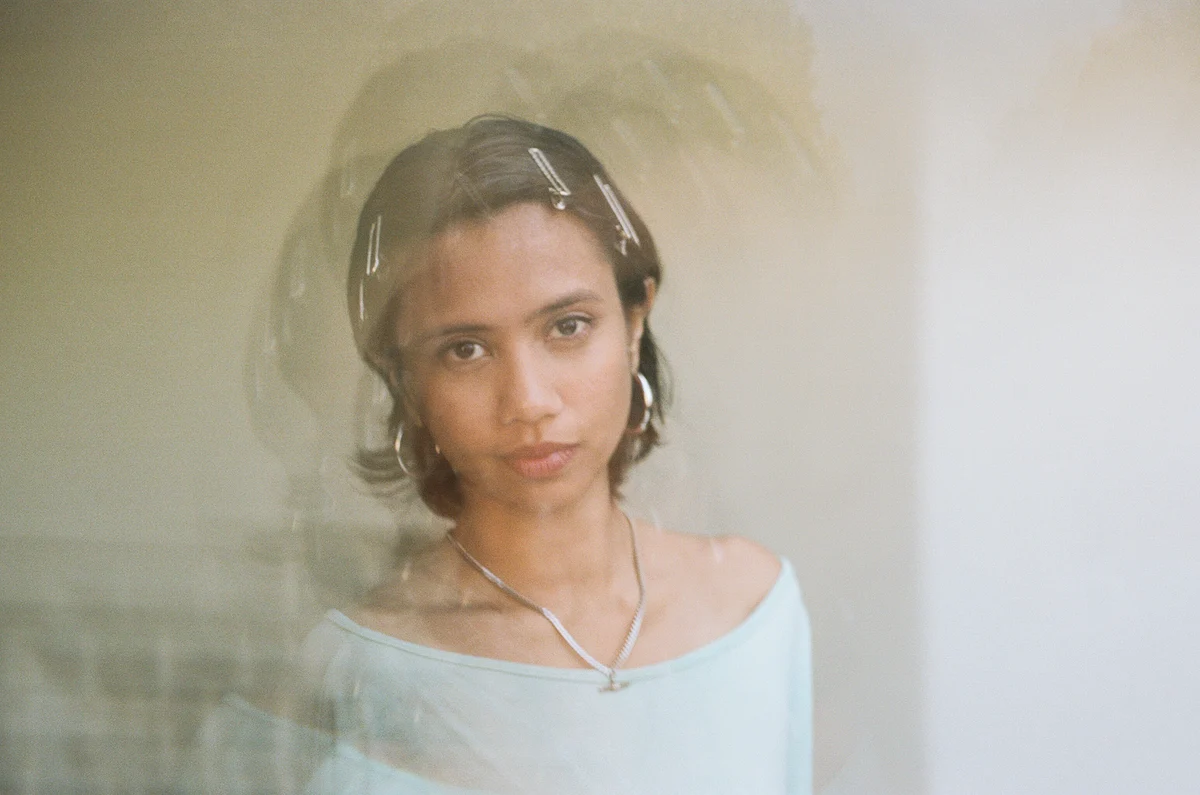
Naya Yeira’s refreshed brand of R&B, indie and internet pop came from a reawakening that saw the young artist open up to collaborative songwriting, teach herself python and find a liberated sense of self, far removed from the big corporations writes Charis McGowan.
Naya Yeira has been a bit hard on herself.
Even though she’s only 25 and already had a massive hit to her name, she’s struggled with how she’s spent her time. “I got frustrated at the loss of momentum that I had,” she said, reflecting on the process of recording na. “It was such a pivotal moment for me; to learn and realise that if success is given to you, it’s not going to last.”
Almost There has been in the works for “around three years”. In a recent Instagram post, she sums it up the time bluntly: “My first song ever got a million streams, and then it all fell apart”.
To properly understand her journey, we’ve got to go right back to the start.
The first song she ever wrote is a pop-jazz number called ‘Afterglow’. Released in 2021, it was the result of a songwriting class while she was enrolled at London’s BIMM Music Institute, where students were encouraged to play around with David Bowie’s abstract form of lyric writing.
“It literally didn’t mean anything, it came from a school project. I submitted to sync and it got placed and it became a big thing where I’m from. It was backed by a corporation-thing, they pushed it well, and I had a lot of attention,” she recalls. “I was still in uni. When it went massive, I didn’t know what I wanted to look like, I was just a kid that went viral. I think I even switched my phone off as it was scary, weird.”

“Afterglow” is the most-listened to song on her Spotify and still racks up her monthly listening numbers to this day. It's a digestible, radio-friendly number, but it's a sound that Yeira never felt totally at ease with. She doesn’t regret writing it, but wants it to soon fade from view. “It’s a good memory, it shows people where I came from, but I hope my new stuff gets that same attention.”
That would be a deserved result: the six tracks on Almost There are infinitely more interesting. There’s a lot more complexity - her powerful, soulful voice still lends itself to melodic verses that blend serendipitously into pop-hooked choruses, yet the wallowing guitar mixed with drum echo of ‘raffle ticket’ introduces a fresher, indie feel to the mix, while the dripping prongs and gunfire beats of ‘i might hit record’ add a fun splash of digital maximalism, and the cloud-rap feel of ‘do my dance’ prove Yeira is more than capable of making her mark in a genre dominated by her generational peers.
Lyrically, she has a theory that every song is a love song. This is arguably the clearest on the slower R&B-driven groove of: ‘raffle ticket’: “It’s about how love is a lottery,” she says. “Especially if you fall in love quite young and you hope to grow together and they don’t turn out to be an asshole later. But in general, whatever you write about, you can take it in a romantic way.”
I ask her to prove that point with an extreme example: “‘Hey Jude’ came from a place of love and care - or Arlo Parks’ ‘Black Dog’, which is about her friend who has depression. It’s not an ‘I love you’ song’, but it’s about saying ‘I care about you and do anything to make you feel OK’.”
What about on one of her own tracks, like, ‘i might hit record’ - one of her EPs more upbeat songs? “That’s about self-love,” she answers assuredly. “You don’t know what’s going to happen but you keep going and love yourself during the process.”
She’s talking about a feeling she has experienced closely, navigating imposter syndrome and insecurity about the direction of her music, but finding a sense of self-belief in the process. Now, finally, she’s happy with what she’s putting out into the world.
“It took me a minute to figure out what I would sound like. Maybe only in 2025 - and I started in 2019. It took so long,” she says. “At first I thought I would only do R&B, as when I sang people said ‘you have that tone’. But, I love jazz, pop, and indie, so I went a bit more experimental and I think I found my niche.”
She doesn’t quite know how to sum up the layers of her sound - she’s posted snippets of ‘i might hit record’ asking fans to describe it for her. “I’m like, ‘how do I market this?’” she says. As an independent artist, she’s acutely aware of what she needs to do to get her music out there, so marketing is at the top of her mind: her Instagram reveals a heroic effort to create content around her music, from vlogs of supporting Craig David to BTS clips of the work behind her visuals (all of which she does herself).


I ask her if she feels it's a necessity as an emerging artist to put so much into social media, visuals and video creation, or if she simply enjoys it.
”A bit of both. When you’re independent, you’re faced with constraints and you learn to do things yourself. I really do enjoy making my own visuals and giving a world to the sonics,” she muses. “I was so hyperfocused on music, I got kind of burnt out. By doing other things, I became more passionate about writing.”
To hone her visual mastery, she threw herself into learning programmes like Blender3D, touch design and coding. The y2k, rough-and-ready aesthetic of her visuals add to the grassroots allure of the work - once again, a far cry from the polished music video of ‘Afterglow’, but in all the right ways. For 2025 track ‘wicked games’, she filmed herself in front of £20 green screen, before layering her takes onto a pixelated 3D city map, where the camera pans and zooms across the buildings as if we’re navigating a rudimentary GoogleEarth. Meanwhile, the visualiser for ‘twenty9’ opens up a digital portal, presenting a multi-dimensional escape from heartbreak.
A self-described ‘digital daughter’ of surrealism, Yeira finds hope in the digitised reality and enjoys probing the creative realms found there. But she’s at a constant tug against the AI doomsphere, purposefully labelling her work ‘Not AI’ in her captions. In one post, she implores viewers to stop watching AI slop and spend time with her own work - “I still believe in human-made digital art” she stresses. At a time when more creatives are going offline and analogue, does she believe we can still rescue digital art from AI?
“Yes. The girls are taking [tech] back,” she says with a smile. “Have you seen that cyberdeck trend? I’m building one. We’re trying to take control of it again because it is such a big part of our lives, it’s not going to go away. So what we can do is make it cute - there’s no big corporation behind it trying to take away your data and soul.”

She hasn’t decided what the casing for her deck is going to be yet, but she’s toying with a gaming-style device. In many ways, her pending cyberdeck makes for a pretty apt reflection of Almost There - there’s no big corporation dictating what it is or pummelling money into making it flawless. It’s just her work, through and through, built from the ground up.
“Having that [success] at the start of your career, and not knowing what to do with it, was an interesting moment to have. It was a very interesting lesson,” she says, looking back on her journey. “I had to figure it all out from scratch. I understand that if you have artistic development and you know creatively what you want to do, that will build more of a foundation. The reason why I make music is to have a connection with people - not be famous.”
Her debut EP is raw, honest and true, from the heart, and made with her bare hands. Not perfect, but almost there in the most perfect way.
Sign up to Best Fit's Substack for regular dispatches from the world of pop culture