

Makaya McCraven and the philosophy of improvisation
Makaya McCraven is helping push jazz forward, writes Ammar Kalia, as the drummer and producer outlines the radically creative process at the core of his music and performance.
In the room is where it happens. On an icy November night in London, drummer and producer Makaya McCraven is commanding the dark club space of KOKO, pounding muscular grooves behind his kit while bassist Junius Paul interlocks with rooted rhythm, Matt Gold provides wafting reverb-laden melodics through his guitar and trumpeter Marquis Hill punctuates with soaring harmony.
Each drum-hit, note-strike and button-push is attuned to the specificity of the present moment, improvising from one phrase to the next to keep the 1500 people watching transfixed, head-nodding, hip-swaying.
“What happens in the room will dictate my choices,” McCraven says a few days before the performance, dressed in a flat cap and thick-rimmed glasses while speaking from his plush Amsterdam hotel room. “We’re on tour and we’re playing my recorded material, which is made up of edited and pieced-together recordings of previous improvised live sessions. Those produced recordings become solidified into compositions of their own and then when we go out onstage, we reinterpret them once more through the lens of improvisation and the feeling of the space. It’s a constantly evolving process and one we’re figuring out each time.”
In the pantheon of jazz – a genre premised on improvisation and innovation within the confines of tradition – 42-year-old McCraven is a true pioneer. Since the 2015 release of his acclaimed debut record on the Chicago label International Anthem, In the Moment, McCraven has been honing his own radical take on jazz composition and production. Using hip-hop sampling and beat-making techniques, he records intimate, entirely improvised live performances with a changing cast of players before chopping up and overdubbing the sessions to create new material for release. The result sees improvisation threaded throughout his process, from the stage to the studio and back to the stage again when he tours fresh material, ultimately informing ideas for new recordings.

“When I’m recording material for potential processing and release, I want to capture something that’s intimate and more imperfect,” McCraven says. “Then I refigure that in the dream state of production and editing. The initial live sessions have been altered and they are now a memory. All my work is about the interplay of reality and real moments with their presentation through a new state of editing and reinterpretation.”
Dubbed a “drummer and producer with an alchemist’s touch” by jazz critic Nate Chinen, on McCraven’s latest, ninth record as a bandleader, Off the Record, he looks back on a decade of this patchwork process to produce a masterwork of its musical potential. Consisting of four EPs featuring four different bands recorded at sessions in Chicago, Los Angeles, London, New York and Berlin from 2015 to 2025, the 20-track double album plays like a manifesto of the McCraven method.
The first five tracks on the record, Techno Logic, are taken from an eight-year collaboration between McCraven, fellow Chicago multi-instrumentalist Ben LaMar Gay and London jazz scene stalwart Theon Cross on tuba. Splicing together their live improvised sessions between London, Berlin and New York, the resulting tracks sink into the thunderous bass frequencies and yearning vocalisations of “Gnu Blue”, as well as soar through the squealing modular electronics and sludgy rhythms of “Technology” and swing along the classic West Coast hip-hop feel of “Boom Bapped.”
The following five compositions of PopUp Shop are some of the oldest on the album, recorded at McCraven’s 2015 show at Los Angeles’ Del Monte Speakeasy. Featuring vibraphonist Justefan, post-rock group Tortoise’s guitarist Jeff Parker and bassist Benjamin J Shepherd, this group’s spliced tracks take on a more melodic tone to Techno Logic’s electronic thump. Bright, sparkling vibraphone melody anchors the offbeat syncopations of “Imafan”, for instance, while “Venice” features a chopped boom bap beat beneath shards of Parker’s high-register guitar melody, and “Los Gatos” pairs a J Dilla-inspired, deep-swung drum beat with Parker’s dreamlike melodic reverb and Shepherd’s plaintive bass harmonic overtones.
Parker appears once more on the six tracks of Hidden Out!, which was recorded during a 2017 residency in McCraven’s hometown of Chicago at local dive bar spot The Hideaway. Collaging together elements of his weekly shows with Parker, bassist Junius Paul and saxophonist Josh Johnson, the resulting compositions channel the dark, dank intimacy of Hideout’s tiny stage, producing the driving bass groove and hard-hitting backbeat of “Battleships”, wah-pedal funk references of “Dark Parks”, frenetic snare drum soloing of “Awaze” and the distorted, close-knit melodies of “News Feed”.
Finally, on The People’s Mixtape, McCraven celebrates the tenth anniversary of In The Moment, the record where he first explored his jazz-sampling technique, by cutting and pasting recordings from a January 2025 gig at Brooklyn’s Public Library with Junius Paul and Marquis Hill – both musicians who featured prominently on the record – alongside vibraphonist Joel Ross and synth player Jeremiah Chiu. The group’s closing four tracks move closer to the dancefloor, with the bleeping synth arpeggiations and clattering percussion of “Choo Choo” creating a propulsive sense of movement, while “The Beat Up” roots itself in Paul’s muscular bassline and Hill’s percussive trumpet soloing, and “What A Life” brings a psychedelic, early hours energy courtesy of Ross’s languorous vibraphone soloing and McCraven’s warped overdub tape effects.

Throughout the record’s 20 tracks, it’s impossible to hear the aural seams where McCraven has looped and stitched his different sessions together. Instead, each composition plays with a remarkable fluidity, alternating what might seem like looped sections with improvisatory solos and interjections of new form to create compositions that feel as if they are constantly shifting beneath your feet. It’s music that echoes through the various moments of its making, ringing out like a Chinese whisper of an idea always repeated and reformed.
“When it comes to making these records, I want my source material to be gathered from spaces that allow for vulnerability and off the cuff experimentation where there is no pre-defined expectation,” McCraven says. “I’m not looking for sessions where we fall into a groove and stay there like a jam band vamping for ten minutes. I want us to be searching for sounds and melodies instead, playing creatively and thoughtfully to reach somewhere new.”
The intimacy of McCraven’s favourite spaces like The Hideaway and east London’s DIY space the Total Refreshment Centre, coupled with his fealty to the energy of the room, means that the crowd often becomes equally as important to the composition as the musicians onstage. They provide rhythmic yelps of approval during Ross’ solo on “Lake Shore Drive Five”, for instance, as well as smattering applause and approval on “YoYoYo Intro”, they mirror LaMar Gay’s vocalisations on “Technology” and provide a lively starting energy for the thrumming drum solo that opens “News Feed”.
“Including the crowd is something that came up when I made In The Moment and first discovered this process,” McCraven explains. “I wasn’t well-known at the time and was recording sessions from a weekly residency I was playing at a small spot. Some people came down to listen while others were just having dinner and having a conversation. People were talking over the music and their forks would clink – it was distracting but it also became part of the narrative of being in the room where this music was being made. I left it all in the final record because it’s so much more interesting than something ‘clean’. I want layers and I want people to be like what the fuck is that sound?”
"What we’re doing is touching people’s lives and the drums and music are just a vehicle for that."
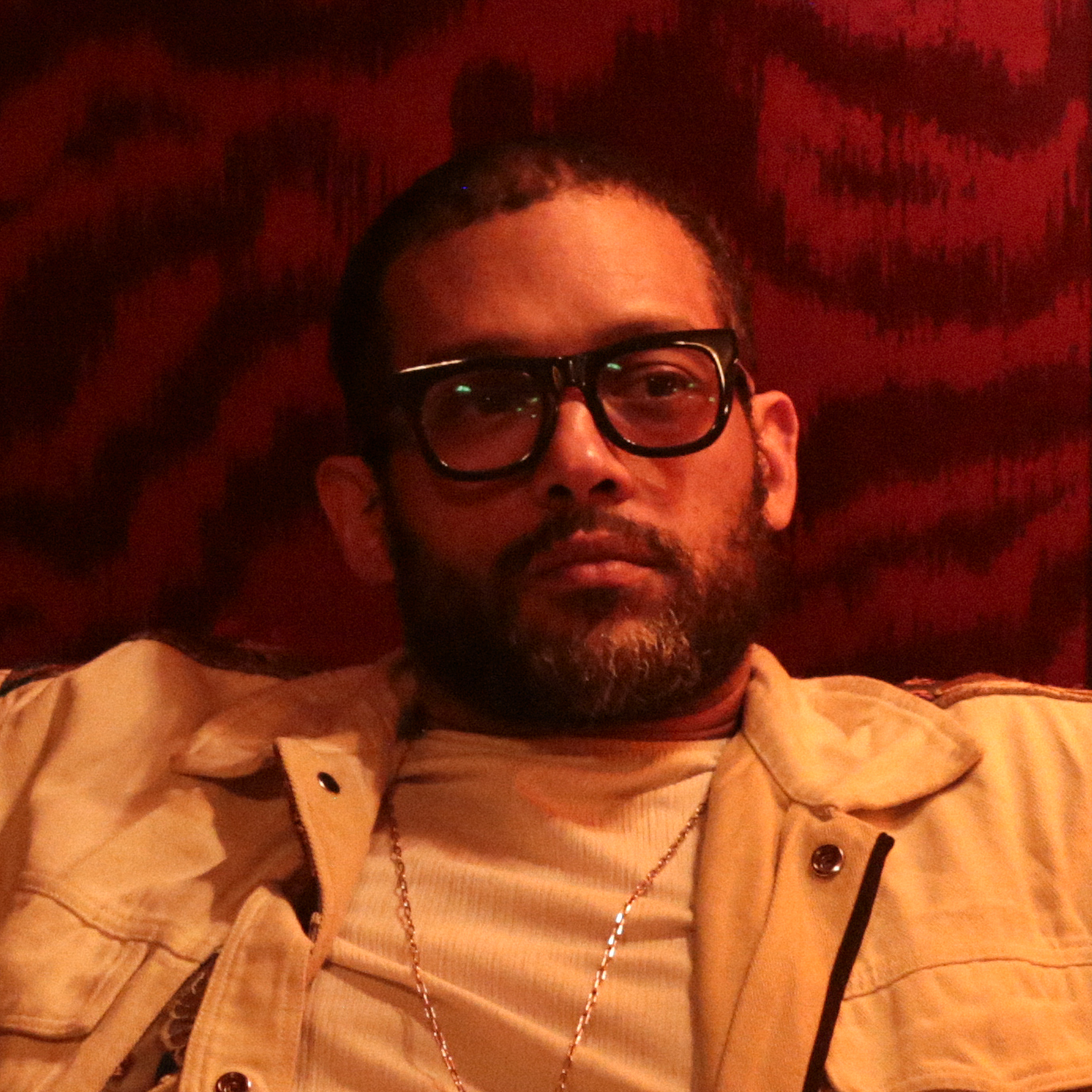
Born in Paris to musical parents – McCraven’s mother Agnes Zsigmondi is a Hungarian folk musician and his father Stephen McCraven is a drummer who played for John Coltrane collaborator Archie Shepp – McCraven spent his childhood growing up near the college town of Amherst, Massachusetts. One of his earliest memories is of a pair of drumsticks being placed into his hands by his father and by the age of five he was already playing in the elder McCraven’s percussive ensemble the CMSS Bashers. Soon becoming influenced by both hip-hop and jazz, while he was at high school McCraven formed the jazz and hip-hop fusion group Cold Duck Complex and began touring local college venues.
“I didn’t grow up in a big city but I grew up around a lot of interesting musicians and a cohort of elders who gave me a world class education,” McCraven says. “From 14 or 15 till I was 30, when In the Moment came out, I was hustling and playing every gig I could. My ears and my playing were wide open, from working with reggae bands to Senegalese percussion groups, Brazilian acts, straight ahead jazz combos, indie rock bands, Cold Duck Complex and even punk outfits. Every gig was something to learn from and sharpen my skills to. I wanted to understand music in a holistic sense and it has made me very proud of my hustling years ever since, as well as being committed to us improvising musicians as a class of people trying to make it creatively.”
In 2007, McCraven relocated to Chicago to follow his now wife Nitasha Tamar Sharma, who is a Professor of African American Studies and Asian American Studies at Northwestern University. The move proved to be pivotal, transplanting McCraven from his status as something of a bigger musical fish in Amherst to the vast creative landscape of America’s second city. “I came to Chicago as the new guy and I really hit the ground running,” he says. “I wanted to find every session, every open mic and just play with as many cats as I could.”

Engulfed in the Windy City’s DIY spirit that had in decades previously given birth to genre-breaking local artists like Tortoise, the Smashing Pumpkins, house innovator Frankie Knuckles and jazz incubator the Association for the Advancement of Creative Musicians, McCraven soon became pivotal within a new generation of improvisers working in the Chicago scene. Joining the likes of guitarist Parker, LaMar Gay, trumpeter Jaimie Branch, vocalist and producer Damon Locks and clarinettist Angel Bat Dawid, by the early 2010s they had helped forge a Chicago jazz sound renowned for its open-ended free improvisations, spiritual influences and experimental production styles, of which McCraven was at the forefront.
“When I first started out, the prospects of playing anything adjacent to jazz and being cool wasn’t possible. It was a dirty word seen to be old, boring and not hip,” he says. “It was regarded as a dying thing but in the years since, things have completely changed. It feels like there’s more respect being given towards Black jazz musicians and people appreciate the genre like it’s a form of Black classical music. Since moving to Chicago, I have felt very akin to the deep, vibrant music scene here where there’s actually so much happening musically that it feels we’re in a post-genre moment. It’s messy, free and in the moment and I feel I can do whatever I want.”
That sense of freedom filtered into McCraven’s initial decision to record his live sessions for resampling, as well as to ensuingly collaborate with likeminded artists from further afield. On 2018’s Where We Come From, for instance, he splices sessions from Chicago stalwarts with the new generation of London players like Theon Cross, saxophonists Nubya Garcia and Soweto Kinch and pianist Joe Armon-Jones, while the same year’s Universal Beings features collaborations with New York players like harpist Brandee Younger, bassist Dezron Douglas and cellist Tomeka Reid.
“Part of why I got into recording live was because I wanted to be self-sufficient – my dad self-released so many of his own jazz records when that wasn't even really a thing and I thought I’d do the same, without the need for a big studio session,” McCraven says. “When it comes to collaboration also, it’s not necessarily about places and scenes, it’s about cohorts of players coming up that create unique sounds and who are all connected with each other through touring and listening to records. Universal Beings was an attempt to decentralise these collaborations and I’d like to keep going to new places and interact with musicians from different perspectives in the future. Improvisation is a universal language we can all communicate in.”

Speaking to McCraven, you get the sense that he has spent so long thinking about and practicing the art of improvisation that it has expanded beyond the realm of music to become something of a life philosophy. “Improvisation is curiosity and exploration of the unknown, which is the crux of what it is to be alive,” he says, leaning forwards. “It’s the natural state of being, since you don’t know what’s going to happen next. You have no clue. We build structures around us to get through this challenging, cruel and beautiful world but at the end of the day nobody knows what’s going to happen. Every moment is an improvisation and engaging with art in this way is an expression of the unknown.”
Improvisation is also a fundamentally collective practice for McCraven – a gesture to reach out and connect with others in a world that can feel increasingly isolated. “A lot of it is capturing the voices of my collaborators, since the people on the record are composing it collectively with me every time we get together and play,” he says. “It’s an exciting, regenerative process and one that ultimately encourages people to come together – both onstage and in the audience – when otherwise they might be looking through their screens and not knowing what’s real or fake anymore. Now we’re all in our own feedback loops, it’s more important than ever to be unplugged and face to face, connecting with each other through the music.”
While it might be near-impossible for listeners to identify the parts of the various live sessions that McCraven has cut and stitched together to make the new forms of his records, when he is going through the laborious process of editing himself, it is primarily the sounds, phrases and improvisations that elicit that same sense of connection that governs what he uses and what he doesn’t. “The production sessions can get messy because there’s so much to listen to and decide on but the source material most often dictates a lot of my choices,” he says. “I’m listening and responding to what I have and what makes me feel something. Once I have that spontaneous, emotive moment identified, I’m stuck with it and I have to shape it or resample or overdub with other techniques to give it form. I’m working every day on my ability to make music come alive and reach the people who are listening.”
Back at KOKO, the room of listeners has surely been grabbed by both ears and rooted to the especially lively and energised feel that McCraven and his band are connecting with this evening. Gut-shaking blasts of kick drums, piercing squeals of trumpet melody and shards of guitar phrasing ring out as the quartet work through Off the Record tracks like “Venice”, “News Feed” and “Dark Parks”, while the earworming guitar melody of 2022’s “Dream Another” encourages singalong murmurs. There certainly aren’t any forks clinking or loud conversations to be heard at a McCraven show anymore.

At the back of the stage, meanwhile, bassist Junius Paul has his iPhone balanced on a stool in an audio sweet spot, with his voice memo app open to record the entire show. It’s an archival practice McCraven has engaged with ever since his sessions for In the Moment, forever adding to his morass of improvisatory material through documenting each live show. While this low-res phone audio would never make the cut for his future records, it’s just another element that emphasises McCraven’s commitment to his process – forever playing, recording, listening, learning and pushing on.
“I won’t stop since what we’re doing is touching people’s lives and the drums and music are just a vehicle for that,” he says. “People tell me all the time after our shows how it’s moved them and I take it seriously. For the young creatives that might be listening too, I know it’s hard out here right now to be navigating social media and having fewer gigs on the ground but I want to say that social capital is never more important than actually doing something. Keep focused on the right things, keep listening to each other and your work will carry you onwards.”
Indeed, you never know where the future might take you next. All we have instead is this present instant. And for McCraven especially, that moment might be fleeting but it’s forever an invitation to be open and to explore. What comes after is anyone’s guess.
Makaya McCraven played KOKO as part of the EFG London Jazz Festival; Off the Record is out now via XL.
Sign up to Best Fit's Substack for regular dispatches from the world of pop culture