

The unstoppable staycation of Kurt Vile
At 46 and with two decades of shape-shifting behind him, Kurt Vile has finally given himself permission to stay still and keep growing, writes Hayden Merrick.
So long as Kurt Vile keeps playing, he prolongs the inevitable: the end.
He has this red looper pedal, you see, and uses it much in the way you would’ve a four-track recorder back in the day: to write, jam, ideate, archive. The problem is, it only holds 99 recordings. Reach 99 and you run out of road. You need to kill some of your darlings, or else take shelter before the thing explodes.
Instead of doing either of those, Vile marked the occasion by writing a song about the dead end he found himself in: a reclined, trance-like groove in which boxy, unselfconscious electric guitars and witty Y2K-esque theories trade the foreground. Always one for shrugging literalism, he titled it “99th Song”.
“You got to get another loop pedal once you’ve filled up 99,” Vile explains over some sunny-morning coffee. “Until there’s the ability to get three-digit amounts of loops. I mean, 999 – I could live with that. Even last night, I was messing with a couple pedals, and they’re both in the upper 90s. It’s time to go grocery shopping.”
It’s surely no coincidence that “99th Song” is the longest track on Vile’s new album – “watch me move so slow,” he drawls during it – as if he’s making this under-the-wire jam really count, putting off a difficult conclusion for ten blissful minutes. “The last track that’s possible before the software explodes,” he sighs later in the track. “The mainframe of my memory / from my brain, but also my pedal.”
It’s a simple premise for a song – but is it, though? It’s about his pedal getting full up, but it’s also about endings and the fear of No More Music. Right?

Vile has always had a look-easy ability to make the unexpectedly deep seem trivial or throwaway. That’s clearer than ever on his new album, Philadelphia’s Been Good to Me, which dribbles reckonings with family, sobriety, and loss through his nowhere-to-be slinky guitar reveries and casually revealing vocal style. The lyrics will occasionally have you doing a double take as they obfuscate profound thinkers into wake-and-bake musings, like you’re sitting next to him in a parked car, idly watching planes take off and land as the sun sinks.
On “You don’t know cuz it’s my life”, for example, he passively pleads with old friends to return to the city: “come back when you know / come back when you can.” You can take away a sense of loneliness from this, but it’s watered down with rib-pokes to “Neil and The Boss” for writing songs about Philadelphia even though they don’t live there: “a couple of my heroes wrote a song / But that ain’t where they’re from” goes the verse. It’s more like he wants to share the city’s magic than lament those that have left.
Elsewhere, there are references to his late bandmate Rob Laakso. But they’re just that, Vile says – passing references. “It kind of cheapens it if I keep talking about it,” he says, and he’s got a point: his lyrics tell you everything you need to know. So does the music. “I was playing an instrument that reminded me of a session I did with Rob. So he’s mentioned in passing, but there’s not a big, huge story behind it.” It’s not that deep. Then again, a departed friend hovering around the edges of an album – that is quite special and poignant. I’m not sure if this is Vile playing down overearnest conversation because it’s painful or indeed cheap, or if it tracks with his whole “that’s life” ease towards everything, “that’s life” being one of his most used phrases in conversation.
This is the song “99 BPM”, a neat partner to “99th Song”, and the instrument in question is a beat-up Gibson acoustic, which sounds rusty and mean as it slides into a lolloping pull-off riff a little like Beck’s “Loser”. The track is bookended by the lyric, “99 BPM / Well, what’s that between friends?”, another one that’s easy to read into.
Throughout Philadelphia, Vile lets us behind the scenes like this by telling us what’s happening musically. We’re given the tempo of the song in this case. On “Rock ’o Stone” he sings, “Laid down this song again in Athens, GA… stumbled into a hypnotic groove.” The gorgeous, hazy opening track, “Zoom 97”, is named after a type of recorder and the 97th recording he made on it (gulp, only two to go!). In the first verse, which sounds like a still, post-storm morning you never thought would arrive, Vile tells us exactly what’s going on: “chimin’ chords on a Goldtone mandolin guitar.” And later, the song breaks down, the instruments falling away, on his lyrical cue of – you guessed it – “the song breaks down.”
These moments feel a bit like fourth wall breaks, though I guess transparency or self-referential are more accurate terms for what’s going on. And it’s a cliche to say that an artist makes you feel like you’re in the room with them, but that’s true for Kurt Vile above anyone else, his music largely about music and the process of making it. You get the sense that music holds a lot in place for Vile, counterweighting other parts of life. He’s 46 now, and it wouldn’t be surprising to learn that “99th Song” was the 99th song he ever gave the world. It’s not. The number is much higher. He’s released enough albums and EPs and EPs that maybe look more like albums that there’s no longer any point counting. Philadelphia is his first since 2022’s (watch my moves), but there’s an asterisk there because he also released two EPs in that four-year interim, one of which – Back to Moon Beach – was nearly an hour long.

The headline for Philadelphia is: it’s his happiest record. Or maybe it’s his most peaceful, or his comfiest. Certainly his most major key.
“I’ve heard enough people say things like that, so it’s just real, that’s sweet,” Vile says. A couple of times during our chat he draws comparisons between this new album and Smoke Ring for My Halo, from 2011, which many consider his breakthrough, and which he considers “my first and only classic songwriter record. The songs are pretty,” he says. “There’s ‘Baby’s Arms’, one of my best songs, or the song ‘On Tour’. I didn’t realise at the time, but if you read the lyrics without the musical accompaniment, it would seem like I’m a dark guy,” he laughs. And with lines like “I wanna beat on a drum so hard / Till it bleeds blood / Pull out the heart
/ Till it don’t start again,” maybe he’s got a point. “I didn’t think about it at the time,” he continues, “so if [Philadelphia] is a lighter version, I’ll take that as well. I’ll take them both, because they’re both real. That’s life.” There, he said it again.
It’s interesting to trace Philadelphia’s lineage back through Vile’s catalogue. Besides “99th Song”, the album doesn’t boast the endless track lengths of Bottle It In or Wakin on a Pretty Daze, though stans of the latter album will find a lot to like. The mornings were hazier, blurrier back in 2013, but they’re equally languorous here, just more lucid and locked in at the same time – partly at the behest of fatherhood and sobriety. This is the first time Vile’s used his Goldtone guitar since the final track on Wakin on a Pretty Daze – “Goldtone” – and many of the cuts bathe in a similar sunshine ease.
He still gets chilly and out-there during Philadelphia, though, as on “Avalanches of Snow” with its bells and brass and lyrics about monsters, dreams, and Christmas Eve. It’s a strange, pretty little capstone that feels more like an end credits scene that sets up a new era than it does conclude this story. Whenever Vile drops a new single, the Reddit and YouTube comments blow up with variations on “dude never misses” and “sounds fresh af.” Indeed, Vile strikes you as the kind of guy who’d pay no mind to his back catalogue, unsentimental and laser-focused on writing the next thumb-skinner.
But this is something that he’s been considering at this stage in his career. “Maybe until very recently I was proud of all of my records – and I still am – but now I do hear when things don’t feel like me anymore,” he reflects. “But that’s alright, because how could I? I’m not the same person I was ten-plus years ago.” Certain songs haven’t grown with him in the way others have evolved and held up better against time’s arrow.
"I get inspired by the potential of a song... once you know it too well, it's almost over. Once your brain knows all about a song, I kind of leave it behind."
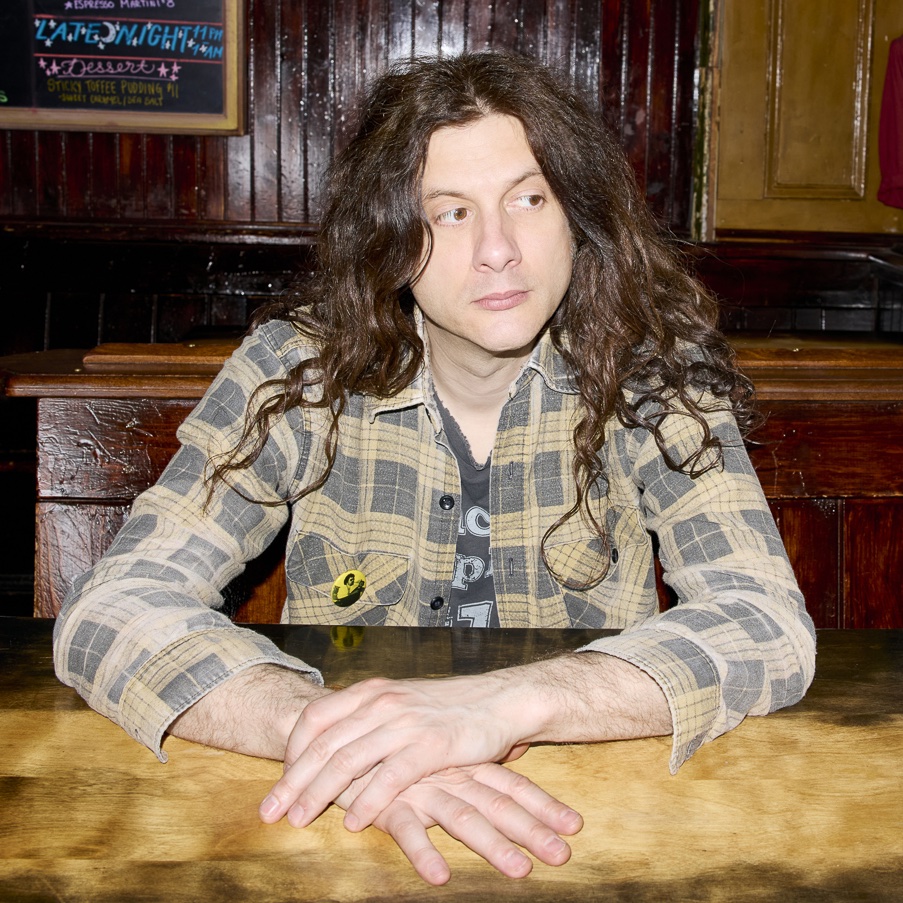
In Neil Young, he sees an example of how to manage that relationship. “He’s 80 now, but you see him play those songs from the 70s, and they’re just as good as ever,” Vile says of his de facto mentor. “And same with us when we play live. We always play ‘Wakin on a Pretty Day’. You just got to do it. But there’s a song on that same album called ‘Was All Talk’, and I feel like it’s a young man’s game. It’s like that coming into your own, having a vision, being confident [thing] or something. I got a different kind of confidence now. I don’t feel that song anymore. I like to get lost in music in my own way, and often it’s a little more laid back.”
In the press materials for Philadelphia, Vile unreservedly calls it his best album. It’s something a songwriter will always strive for, of course, but the claim is more commonly pulled out when they’re on album two or three, rather than a seen-it-all institution like Vile, who has weathered the changes of the music industry since he formed The War on Drugs two decades ago. He’s unusual for an artist of this magnitude in that he doesn’t have a ‘golden era’, or a clear frontrunner for his best album.
“I know the songs are a lot simpler, so it depends on taste – it depends on everybody’s taste,” he muses of Philadelphia’s merits. “There’s this thing Neil Young said which I latched on to: ‘Your past is your own worst enemy.’ Wherever somebody was when they heard an album that really resonated with them – a lot of people might say their favourite record is Wakin on a Pretty Daze or something,” he interrupts himself. “But this is me on my own journey. So I would know. I would know that I stumbled upon some new territory here. It’s up to others to have a favourite, but this record is my favourite now.” He giggles endearingly at that point, a bit like a hyena.
In many ways, then, the new album has an almost radical MO: progressing but getting increasingly comfortable at the same time. Vile continues to tinker with his process and tools and outlook, but he doesn’t need to be uncomfortable, pacing and chasing and self-hating, to pull that off, as some artists might have you believe. “There’s two things you could really do here,” he says of this point in his career. “I’m in Philly, I’m chilling, I’m making music. You could do things the same exact way all the time and relax, but I feel like I’m still branching out. Things are always in flux. Things keep changing. And I guess that’s sort of the fun. Every record is done a little different. And this past record was being really comfortable in Philly and also my studio, and reasons to leave the house – so many different neighborhoods and nooks.”

To state the obvious, Philadelphia’s Been Good to Me is a love letter to Philly, but that’s only one part of it. “I’m still proud that I did [name the album this way] – and I had no other thing to call it – but in a way you could be mistaken for making a regional record, or people might think it’s a concept record about Philly. But whatever, that’s all fine. It’s not,” he says, perhaps letting the Sufjan Stevens 50-state-project fans down gently. “Philly’s mentioned a few times, and it’s where I’m floating along here in my world.”
It’s more of a backdrop than a main character, then. Even on the title track – “Philly’s been good to me”, ostensibly the album’s mission statement – he quickly wanders from Philly to Baltimore (“We start our tours there at the Ottobar”). Then to his sibling’s beach house, and then thousands of miles away, to Los Angeles. “LA was good to me when I was young / Maybe I’ll come back for a spell, I could use one,” he sings over a nostalgic, Twin Peaks-y synth drone. He calls the track “a spaced-out psychedelic lullaby” and a homage to Tom Petty’s “California”. The meandering nature of these lyrics suggests he’s thinking out loud, tracking initial drafts as placeholders. And it’s not that anything is unfinished; it’s that transparency thing again, and letting the songs be what they want to be, and maybe a way of restricting one theme from dominating another.
If there is a dominating theme, it’s not so much Philly as home. Of course, home encompasses Philly in a literal sense – the Schuylkill River, Lincoln Drive, the Fishtown neighbourhood haunts in which his social life plays out, all of which he namedrops across the record. It also means his home studio, OKV Central, built over the last few years and the place where most of the album was put together. It also means his family and friends. All of that good stuff is distilled in the lead single “Chance to Bleed” and its video. It was shot in a compact watering hole/venue called Kung Fu Necktie, and fades up on a subway train barreling past the Wakin on a Pretty Daze mural.
“Chance to Bleed” is one of Vile’s most upbeat and goofy songs in years, its co-sung, half-shout chorus almost reminiscent of something like “El Scorcho” or at least the moments when Berman and Malkmus croon together on Silver Jews’ American Water. Memphis garage-rock legend Greg Cartwright, who’s fronted or played in a dozen bands, sings on the track, as does Natalie Hoffmann of Nots. The video is packed with these famous faces and KV pals, young and old, all partaking in a riotous Friday night lark under neon orange lights. Ethan Buckler of Slint is perturbed by break dancers and then gets behind the decks. Oddball Manchester poet Jim E. Brown gets on the jell-o shots. John Moloney brandishes a rubber knife, for some reason.

By Vile’s standards, the track is a proper rager. He says it’s a few BPM faster than anything he’s written recently. “The lead guitar, which is really hot and bluesy sounding, that’s an Epiphone Coronet,” he explains, “and the pickup literally blew up by the end of the song. I’ve had trouble with that guitar ever since.” If you rock so hard you break stuff, you know you’re doing something right.
“I’m all about ‘fuck the bridge’ and just keep playing the chorus,” Vile elaborates of the concept behind the song. “‘Chance to Bleed’, it’s basically the first song in a while of that concept. Like, ‘Pretty Pimpin’ starts with the chorus – that was sort of new for me then – and now ‘Chance to Bleed’ is all chorus.”
Staying in this zone makes sense, extrapolating that one magic moment into something bigger and foundational without losing what makes it special. Once he strikes gold, he runs with it. He doesn’t sit with it until it morphs or disappears. “I get inspired by the potential of a song, I guess you could say. Once you know it too well, it’s almost over, and then you just gotta hope you got the vocal down in time,” Vile tells me. “Once your brain knows all about a song, I kind of leave it behind. You gotta get it at that perfect moment.”
Not just anyone is capable of this. Vile surrounds himself with musicians who are driven by instinct and innovation over conventional musical literacy. He’s often written about in relation to his many collaborations: that time he produced for Dinosaur Jr, the record he made with Courtney Barnett, covering John Prine songs with the man himself. He tells me that when it comes to choosing collaborators, the résumé shouldn’t factor into it – he’s all about his chosen family. “In my world, if somebody’s a good guy and they’re musically inclined whatsoever, it really just matters if you like hanging out and laughing with the person,” he says. “Because unless they just don’t have a musical bone in their body… maybe they get to be a tour manager. But ultimately, that’s the idea. If you connect with somebody, if you can bounce off somebody – they’re the kind of people you want to think of in your band or in your circle, before anybody who is, quote-unquote, technically good.”


Vile’s actual family is naturally a central part of his process, too, his work and personal-life lines seemingly blurred, but in a good way. That’s his daughters, Awilda and Delphine, on the cover of (watch my moves) for one thing. Together, the three of them covered Charli xcx’s “Constant Repeat”, Vile having inadvertently made them superfans.
Awilda and Delphine repaid the favour by slipping newer powerpuff popstars like Chappel Roan and Olivia Rodrigo under their dad’s nose. It’s a back-and-forth relationship and speaks to Vile’s open mindedness. “I taught her the Beck song ‘Asshole’ on guitar,” he says of Delphine. “Also, I turned her onto another artist that’s been around a while, but I became a fan last year: Yung Lean.” He says Lean’s music is hypnotic as hell, a common interest given Vile’s propensity for let-it-play codas. “I played her ‘Agony’, and just to hear her sing along is really sweet,” he says. “When your 13-year-old daughter is singing along to ‘Agony’ by Yung Lean in the back seat, that’s pretty sweet.”
Lyrically, this album keeps his daughters and wife close. “And I am so proud of what you’ve become as well / Always growin’ (always showin’) / A little spark round the world from whence you walk,” he coos on the twinkly, gentle “Every time I look at you”. “My baby girls, they keep me high / Ain’t on no trips, no LSD / True love is the pure drug for me,” he sings on the opener, foregrounding the central theme of the album. Vile’s been sober since 2018, but he occasionally sparks up. It gets him out of his head and onto a more experimental mindtrack, he tells me: moments like the woozy colour swirls of “Red Room Dub” seem to evidence that. But mostly he’s “stoned on music, the best kind of high.”
Having kids has shifted his process a little. He wakes up early. His wife, Suzanne, is pretty busy with her own business. When we chat, she’s been away for a few days so he’s been getting the kids up and at ’em by himself. He can get to work once they’re at school, of course, but “another part of my day literally starts once everybody else goes to bed, because then there’s no interruptions,” he says.
He still has afterdark company in his foresty neighbourhood of Mount Airy (a pretty perfect name for the man who gave us “Air Bud” and dozens more airy, outsider jams). “There’s lots of red foxes. Foxes are my spirit animal,” Vile tells me of his Philly enclave. “I know you got foxes over there, city foxes, but they make such a crazy noise. They hang out, they’re night owls – or night foxes, whatever. When I step outside of my world and everybody’s asleep, and I’ve been doing whatever I’m doing, I like how they take over. Not that there’s a million, but there’s one or two sometimes on a magic night. It’s always a magic night when you see a fox running by.”
You can picture the scene when you hear a track like “Red Room Dub” how its milky guitar trails might curdle with the starry sky, a fox slinking past as the music seeps out of OKV Central towards the woods. Vile brings up the recurring fox motif in Phoebe Waller-Bridge’s Fleabag. In the show, there’s a fox that appears during scenes of acute emotional tension or intimacy between the main character, Fleabag, and her love interest, the priest. The night before my chat with Vile, I was walking back late and one came up to me a few streets from home. It sat with regal poise and an immaculate campfire-orange coat. It wasn’t skittish or mangy at all, as London foxes tend to be. I might have been dreaming if I hadn’t snapped a photo (and later sent it to Vile).
I popped a squat and watched it for 15 minutes, this shadowy guide, disarming but alert. He blinked slowly at me, like a cat, and then curled up into a croissant shape against a garden wall a few feet away. I like to think it had something to do with Vile. Maybe Fox-Vile wasn’t nudging together two forbidden lovers as in Fleabag. Maybe he was simply spreading his spirit of patient, watchful creativity through the afterdark city streets of Shepherd’s Bush and beyond.
In the final scene of Fleabag, Waller-Bridge leaves the audience at the bus stop with the fox. She walks away. It’s the end of the story. But it’s never really the end, is it?
Not until you reach 99 songs on the red looper anyway.
Sign up to Best Fit's Substack for regular dispatches from the world of pop culture