
On the Rise
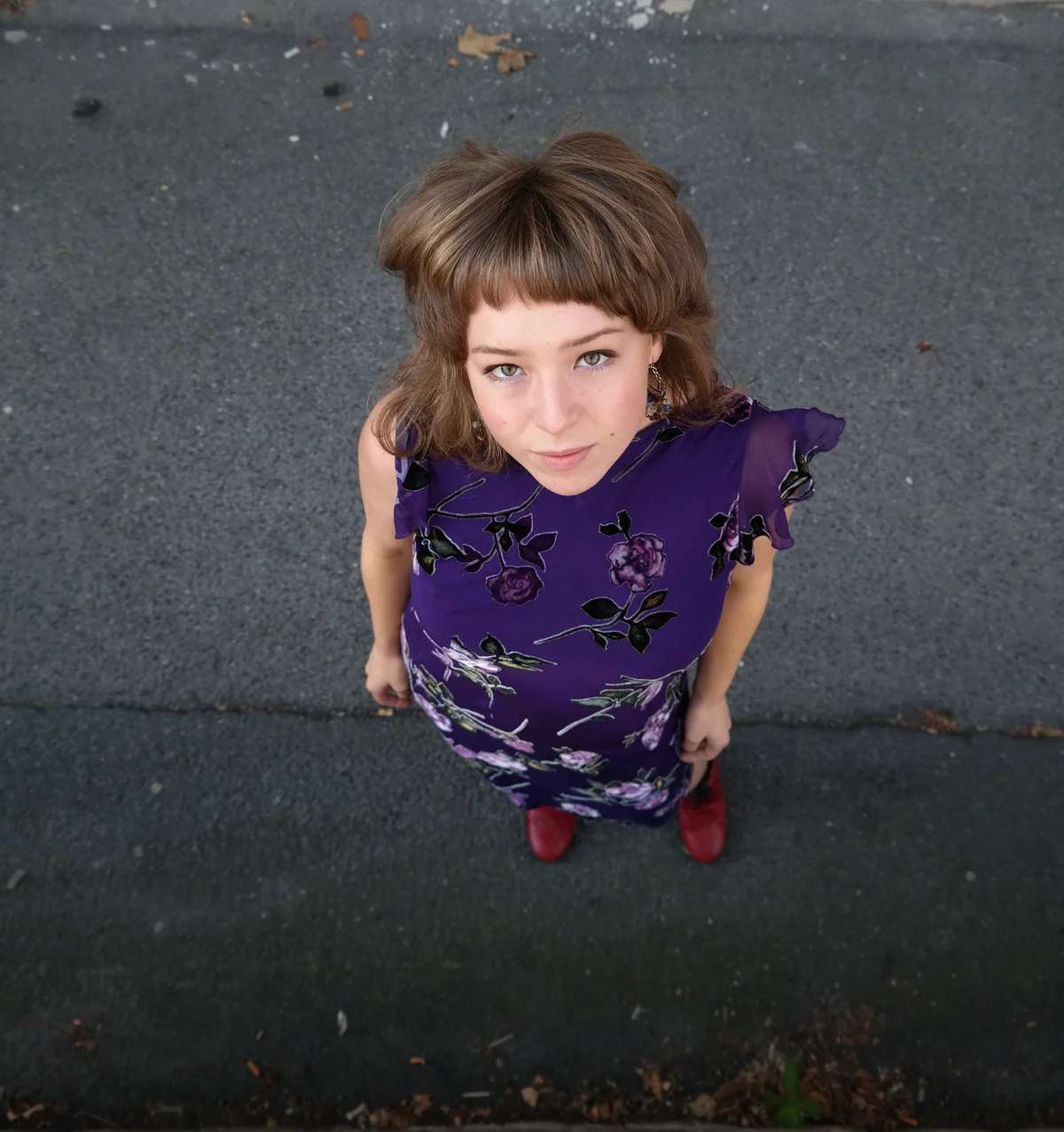
Ea Othilde
Ea Othilde, the breakout artist at this year’s Øya festival, tells Ed Nash why trusting her natural songwriting instinct is the only way forward.
Seeing an artist make a huge leap forward is a joy to watch, and that’s exactly what Ea Othilde did this summer.
On a balmy August Thursday afternoon at Øya in her hometown of Oslo, Othilde’s set had an assurance and poise that belied an artist with one album under their belt. The skill of her songwriting and singing, coupled with how much the crowd were willing her on made for such a joyous, immersive set that a young child started dancing along to the final song.
Before I went to Øya I asked the festival founder Claes Olsen which local artists I shouldn’t miss and Othilde’s was the first name he mentioned. In keeping with Øya’s ambition to showcase local artists and move them higher up the bill each time they perform there, Othilde’s performance was proof that she’s ready to follow her fellow Norwegians Dagny, girl in red and Sigrid in crossing over from local favourite into something far bigger.
Having developed her craft over seven years, Othilde is happy to play a long game without compromising her art. When we speak she’s enjoying some time off after a year that’s seen the release of her incredible debut album I Will Not Be Like That in 2025 - one of the best debut albums I've heard in years - and this summer’s EP You'll Leave The City, where she added even more colours to her songwriting palette.
“I've been drinking coffee and sleeping late and it’s been great. After playing concerts this summer and the album release last fall it feels good to be writing again, to be back where it all comes from, sitting alone with my book and playing guitar.”
Like the city itself, Oslo’s music scene is very intimate - communal, collaborative and anything but cliquey - in part because it’s a small city, but also because music is hidden in plain sight everywhere you go. “It's a very small community. People meet around the city because it's not that big”, she explains. “You see each other in bars or at parties. A lot of my musicians work with other bands, so it's always the same people, you meet them, you work with them, and I love that.”
Othilde started playing music at primary school when she was 11, initially inspired by the success of AURORA. “I loved her, she was a very big inspiration when I started writing, her set with TOMORA at Øya this year was the highlight, it was so impressive.” Her first steps in the writing process began with a curiosity about how a song was constructed, before realising that she instinctively knew how to do it.
“I had a band with my classmates when I was 11 and I started playing guitar. That was my introduction to playing instruments and playing music as a band and I remember thinking, ‘I can write the music myself.’” She describes her first attempts as “very childish songs, but we started playing those songs in the band and I loved it. I wrote so much in my room, I used to play more piano, and I was writing all the time.”
When Othilde was 14 she met the producer Hans Olav Settem by serendipity when he was her school singing teacher. “I started working with him in these classes. I showed him what I was writing, and he was much more interested in writing songs with me than teaching me singing. We had really a good chemistry.” Settem and his partner Marit Othilie Thorvik have been Othilde’s producers ever since. “It was random, it started in these schools in Oslo.”
Settem and Thorvik had a meeting with Othilde’s mother and asked if they could start working with her daughter in the studio. “We started working in the city when I was 14 and it gradually became more serious. We made a plan of releasing music, but it was very organic and they left me a lot of space to figure things out. We worked very slowly, and I really appreciated that.”
Three years later, Othilde released her debut EP, 2022’s How I'd Like It to Fade, when she was 17 and her story started to take shape. “When we released the EP, I’d learned a lot and the artist project was born. We worked together as the three of us and ever since then it's just been us and most of the same musicians.”
Her next release, 2023’s Mary, Aren't You Tired? EP was nominated for a Spellemann award, Norway’s equivalent of The Grammys, and she got her second nod last year for I Won't Be Like That.
“That's been crazy and I feel so lucky. Now I'm a bit older and more used to the industry, I understand more of what I've been able to do. When I was nominated the first time, I was 18 or 19, going with the flow, just enjoying everything that was happening.”

I Won’t Be Like That is an incredible record, the sound of an artist introducing themselves as a singular voice. Throughout its stories of falling in and out of love, growing up and moving on, loss and experience, the musical shapes constantly shift, all underpinned by Othilde’s wonderful singing. Across its 10 songs, it moves from “Will I Be Hearing From You?” which could be a modern-day Nancy Sinatra and Lee Hazlewood song relocated in Oslo, to “A Look of Surprise”, which blends folk, a jazz interlude and epic guitars, to the sparse, acoustic yearning of “Young Love”.
Othilde describes her writing as a way of processing emotions, turning stories of the everyday into something universal, cathartic and relatable. “That’s the essence of my music and why I write. It's so simple to me, I write about my life and what I experience. It feels like the most important thing in my life is to express myself through music.”
As part of the writing process, Settem and Thorvik make suggestions on lyrics and production, but Othilde’s method is to paint the picture of the songs and then present them to her producers. “I say to them, ‘this is the song, what do you think?’ And then we take it from there. It's very difficult to let go of my own lyrics, because it's what I want to say and as long as I feel like I've expressed myself, I feel done with the song.”
This summer’s You'll Leave The City EP was more collaborative, written by Othilde, Thorvik and Settem. “That was so new to me, to write all of the lyrics together and be in the studio all day, every day, doing everything together”, she says. “I learned so much. You can't hold anything back, you have to be completely honest, you have to put yourself into the head of the other people and they also have to try to understand you. It feels like you're very vulnerable, but it was very good for me to work like that.”
As part of her writing process, Othilde does something refreshingly analogue, she keeps a diary and uses it both to document the everyday and as a source of inspiration for her songs. “When I'm sitting down to write music, I always pick up my diary. It's daily inspiration, you pick things up around you and I really love that. It's such a big part of my creative process, ‘Oh, this word sounded good in this context, or this sentence was interesting.”
Having switched from the piano to guitar at the age of eleven, the guitar is central to her songs, but Othilde’s musical landscape is as broad as her songwriting, taking in strings, brass, and keyboards. “The guitar is very important, that's where the songs come from, but since my second EP, we’ve worked very closely with the cello player Sunniva. She’s a big part of the band, she loops the cello and has a lot of effects on it which makes it sound like a guitar. We use saxophone live and on the album. It's important to put different spices into the music.”
You'll Leave The City saw the guitars dialled up, both from necessity and Othilde’s desire to keep going with her instinct. It was recorded in Florence, without Sunniva or Runa Husøy, the saxophone player, who couldn’t travel to Italy for the sessions. “Because they weren't there, it was only guitars. It depends on where we are and what situation we're in when we're recording.”
As we talk about her songwriting, I tell her I noticed a lot of the Norwegian artists at Øya spoke in their native tongue between songs. Earlier this year, Hayeminol - who were two years above Othilde at school and also played a stunning set at Øya - released Ingen vår i år, an album sang entirely in Norwegian. I ask if she’d ever consider writing songs in her mother tongue, but Othilde feels that the universality of English language in pop music’s canon is the best way to tell her stories.
“I've thought about this a lot. I was writing in English when I was 11 or 12 and I barely spoke English. It's always been in English for me; everyone is influenced by how much music is in English. I feel a distance when I write in another language and I really like to write in English because of that, it's very important to me.”
Her diary is written in Norwegian but if she picks up on something that inspires her to write music, “I always switch to English. It's that distinction between languages and what they mean to me.”

Having spent time developing herself as a writer, Othilde’s plan is to continue following her instinct. She describes the thought of a record label deciding on her artistic choices as “my worst nightmare. It would really kill my inspiration. Working organically and with the same people helps me so much in keeping inspiration alive and genuine. If I felt too much pressure to do this or to do that, it wouldn’t be what I wanted to do anymore.”
Othilde played her first show outside of Norway at this year’s SPOT Festival in Denmark, and whilst she'd like to stretch her wings further into Europe next year, her focus is her art. “I would love to tour the world, but the most important thing is right here, right now. That doesn't mean I'm not ambitious, but I love what I do, I love the people I'm working with, writing music, meeting my musicians in the studio and making music together, that’s what’s most important to me.”
Next year Othilde plans to release part two of the You'll Leave The City EP, with writing due to be completed this year, which will see her return to the live stage. “I'm back at the start, writing again. I'm sitting in my room, writing from scratch again and it feels great.”
With songwriting being as much about confidence in one’s art as it is about expression, I ask her how does she know if she’s written something that’s genuinely great? “That’s such a good question and it really hit me right now, because I'm in the process of writing new music and I've been questioning this a lot recently.” She pauses and then sums up who she is as an artist, one that takes their time, but knows that the writing process is all about being satisfied with destination, rather than the journey of story.
“I listen to that gut feeling, is this something that I want to say? Does this feel like it's coming from somewhere? I really recognise that feeling when I'm writing, even if it’s composing a melody or a chord progression, it gives me this feeling or it doesn't. I'm really looking for that feeling of, ‘yes, this comes from me…’, and that's what I want to continue working with.”
The You'll Leave the City EP is out now via Koke Plate and its companion EP is released in 2027.
Sign up to Best Fit's Substack for regular dispatches from the world of pop culture