

Bicep go in search of the true north
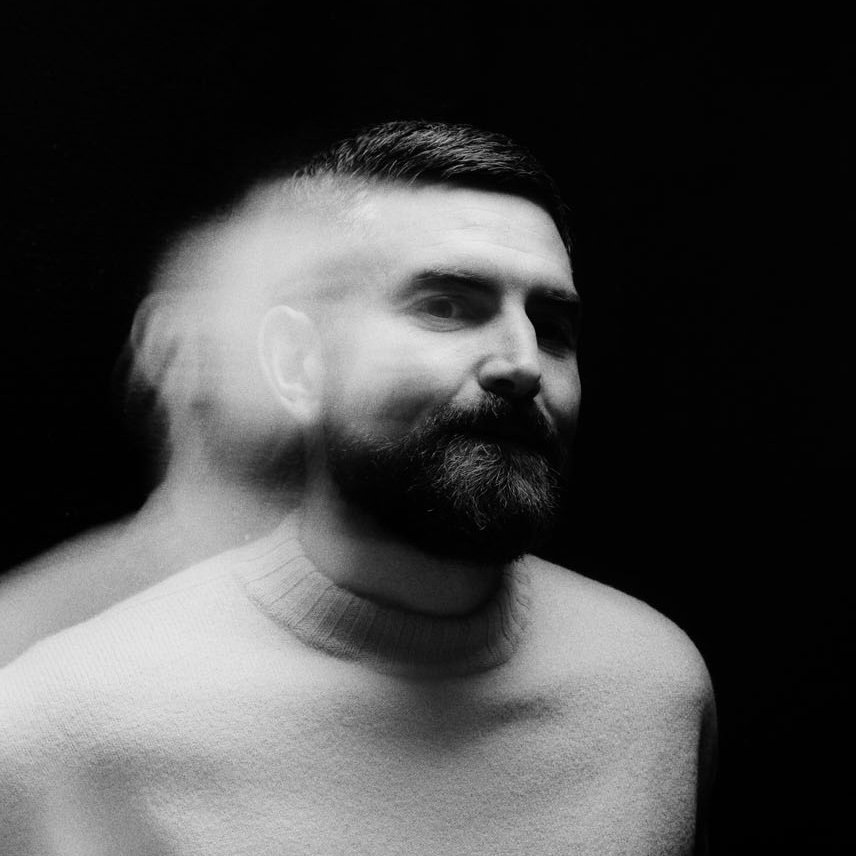
Belfast-born electronic duo Bicep tell Alan Pedder about their unique collaboration with Indigenous musicians that calls on the world to witness the Arctic’s unfolding crisis through the eyes of those who call it home.
As year-round temperatures in the Arctic continue to sound alarm bells for the planet, Indigenous communities living on the frontline of the climate crisis are under increasing threat – and unstable weather conditions are just the tip of the proverbial iceberg.
The cascading impacts of climate change on Sámi and Inuit ways of life are complex and point towards catastrophe. Where there were once clearly delineated bridging seasons – the traditional Sámi calendar has eight altogether – wildly fluctuating weather conditions are throwing millennia-old practices out of historical alignment and into a future of uncertainty and chaos.
For the reindeer herding communities of Sápmi, the Sámi lands that span from the coast of central and northern Norway to the Kola Peninsula in Russia, the constant pressure to adapt to and work with the changing climate is acute, exhausting, and increasingly expensive. In areas where the snow melts too early in the winter, the ground becomes frozen with a thick layer of ice that reindeer hooves aren’t equipped to dig through to get to the lichen that they need to survive.
In particularly harsh winters, the reindeer can become too thin to migrate to their spring pastures and calve when they should, with ruinous knock-on effects. In the high Arctic, on the island of Svalbard, reindeer have been known to forage for seaweed as an alternative food source, but that’s not a viable solution for every herd and the Sámi are increasingly having to rely on supplementary feeding that, for many, is becoming unsustainable.
Other Sámi and Inuit livelihoods, like fishing and hunting, are also being eroded, and there’s a real fear of what comes next if the basic conditions for Indigenous culture and land use continue to worsen. If people can no longer practice their traditional way of life, what happens to the knowledge, the stories, the memories, and the language they use to describe it? These questions and more are explored in TAKKUUK (pronounced as tuck-kook), a strikingly powerful new audiovisual work that teams dance music big-leaguers Bicep – the Northern Irish duo of childhood friends Andy Ferguson and Matt McBriar – with seven Indigenous artists from Greenland, Norway, Sweden, and Canada. With a feature-length film element produced in tandem with longtime Bicep stage designer and visual artist Zak Norman and Bristol-based documentarian Charlie Miller, TAKKUUK lives up to its title, an Inuktitut word used to urge a person to take a closer look, inviting us to go beyond the headlines and frightening buzzwords of climate change to see what’s really going on.
“We’ve been able to see firsthand just how deeply interconnected a lot of the issues are, and it’s really humanised things for us,” says McBriar, dialling in from Bicep’s east London studio, and Ferguson, sitting beside him, agrees. “Being able to talk to artists from communities that are directly affected by climate change, and starting to understand the knock-on effects that has on their culture, their language, and what life will look like for the next generations of those communities has been a real learning experience for us,” he says. “It still is, and with TAKKUUK we are sort of inviting people to come and be a part of that journey, and to learn and experience alongside us.”

If you’re imagining another David Attenborough-style documentary with high-budget cinematic pizzazz, TAKKUUK is not that at all. In many ways, it’s a reaction to that kind of filmmaking, which often places more emphasis on the epic and showstopping beauty of the wilderness than on the communities who live there. As Norman explains, “The people [in those kinds of documentaries] can sometimes look like characters in a movie, and there’s this otherness that’s engendered. You don’t always feel the closeness. For our film, we really wanted to make the people feel a lot more familiar and the environment feel less familiar, quite alien.”
Shot with specially customised infrared cameras and combining documentary realism with artistic abstraction and concert projection aesthetics, TAKKUUK recently premiered to a stunned audience at London’s OUTERNET ahead of a global tour of screenings ranging from experimental, multiscreen experiences to more traditional cinema settings – the culmination of two and a half years of work – and the soundtrack lands this Friday on Bicep’s longtime label home Ninja Tune.
The road to TAKKUUK begins, oddly enough, in the neotropical biome of South America. A collective of interdisciplinary artists and scientists from Colombia had gathered a vast bank of field recordings and bioacoustic data from the country’s teeming forests, and wanted to somehow translate that into music. Partnering with long-running non-profit organisation In Place of War, which has a history of groundbreaking music-forward projects and operates under the mantra that “creativity catalyses change,” the project evolved into an album of recordings by the likes of Brian Eno, Kate Simko, Matthew Dear, Coldcut, and Human League/Heaven 17 co-founder Martyn Ware, among others – each using elements of the sound archive to tell part of a broader story of Colombia’s ‘megadiversity’ and the need to preserve it at this crucial time in history.
That album, Cucosonic, somehow found its way into the ears of a man named Lars Kullerud, Tromsø resident and President of the University of the Arctic, who immediately saw an opportunity to collaborate on a similarly minded project in tandem with In Place Of War. As CEO and Creative Director Ruth Daniel explains, “I got this call from him out of nowhere and he said, ‘I’ve heard this record. It’s brilliant. Can you do the same for climate change?’”
Only slightly daunted by the scale of the ask, Daniel began to gather different perspectives, from climate activists, scientists, and Indigenous people at the frontline of the climate crisis, to see what form such a collaboration could take – and that’s how the EarthSonic project was born. “We all know how powerful music can be to tell stories and reach people's hearts,” says Daniel. “It does something to you that science maybe struggles to do, and sometimes the science can feel overwhelming.”
Functioning as the music-focused offshoot of In Place of War, the initiative includes education and advocacy projects, a record label, a sound archive, live events, and, now with TAKKUUK, ambitious audiovisual installations that have to be seen to be believed. Not that a film was obviously on the cards from the beginning. The first EarthSonic email that arrived in Bicep’s inbox, in early 2023, was little more than an invitation to Greenland as an exploratory field trip, just to see what stories were out there, waiting to be told. While McBriar stayed home to eagerly await the birth of his first child, Ferguson packed his thermals and headed up north.
Over the next two weeks, he cris-crossed the frozen tundra, visiting mountains and glaciers, and crossing frozen lakes by dog sled to venture into the wilderness, experiencing “a pretty full spectrum” of areas that were under threat. “I was able to spend time with the local people and get a deeper understanding of what Greenland actually is,” he says. “I’d never met someone from Greenland before and didn’t understand anything at all of the language, it was like starting from scratch, essentially. Day 1, back to school!”

Luckily, the team brought some excellent teachers along, like Adam Lyberth, who guided Ferguson and the EarthSonic crew around the immense Russell Glacier, a popular tourist spot on the midwestern edge of the Greenland ice sheet, roughly 200 miles north of the capital Nuuk. “He was so good at contextualising and humanising what’s happening with the glacier, which you can’t really imagine fully without going there,” Ferguson explains. “As we walked up to the glacier he stopped and said, ‘This is where it started when I was born,’ then a bit later ‘This is where it was when I was 20,’ and then it was another 15 minutes of walking until we got to where the glacier starts now. I looked it up and that’s roughly the equivalent of six thousand Wembley Stadiums of melting, and that’s just what’s melted away in the last ten years alone.”
Walking the glacier, Ferguson says he was struck by how flawlessly smooth the ice, like a bowling ball made of crystal-clear glass. Together with the team’s audio technician Jasper Trim and his array of experimental microphones that allowed ambisonic three-dimensional recording, he spent hours capturing all he could of the glacier’s strange music, loud as a symphony and eerie as a graveyard, “like hearing songs from another dimension.” “It sounds a bit like cars smashing into each other, or people slamming shut a car door or bonnet, plus all these squeaking, popping, and fizzing sounds, and the sound of water dripping everywhere,” he says. “It’s something I’ll never forget.”
Later, in Sisimiut, Greenland’s second city, he attended the non-profit, volunteer-driven Arctic Sounds festival where he first encountered some of the artists who went on to become a part of the TAKKUUK story, like firebrand hip hop artist Josef Tarrak-Petrussen who raps in Greenlandic (or Kalaallisut to give it its Inuit name). “I didn’t have a clue what he was saying but I could feel the energy in the room, and it felt like this really punk experience,” Ferguson recalls. “He was like, ‘I don’t care, I’m saying what I’m saying,’ and people in the crowd reacted to it viscerally, getting riled up. It’s not something you can see every day in London.”
Discarding early ideas like a Bicep performance on a glacier, which would have been way too on-the-nose, it became increasingly clear that, for every obvious story about the climate crisis to be told – the perilously intertwined fates of the Greenlandic ice sheet and almost every coastal settlement on Earth, for one – there are hundreds more stories playing out on a much smaller scale, each one with the potential for catastrophe in its own way. Returning to the studio in London, Ferguson felt like the project had a more appropriate direction to go in, and McBriar agreed: let the music tell the story of the ice and leave it to the people of the lands to weave in their own stories and sensations throughout.
"We could have played it safe... but we had this one-of-a-kind opportunity to work with the maddest, broadest range of stuff that we could imagine and see if we could make it work."
The first thing they did was to go through the hours of field recordings – the glacier fizzing and popping, boats coming into the harbour, street noise, husky chains, the steamy hiss of a sauna – resampling them into the drum and keyboard sounds from which they constructed the first demos. “All the chords are made from these different sounds, and I think it makes the songs feel eerily authentic, like artefacts of the landscape,” McBriar explains.
“I think we put everything to good use,” adds Ferguson happily. “We also used some earlier recordings made by scientists, recorded from deep, deep underwater, as well as the sound of us hitting pieces of ice in the studio. It’s all mixed in there.” Even the “ice cries,” as he refers to the glacier sounds at their most discombobulating: “They’re so alarming that you can’t really use them fully in a track as it would just come out as noise, so we had to try and pick parts of those sounds out and incorporate them.”
When it came to choosing their collaborators, it was more a matter of timing than extensive research. About six months after that first trip to Greenland, the people behind Arctic Sounds were holding a showcase of Indigenous artists at the Nordic House in Reykjavík, as a partner event with Iceland Airwaves. Festival director Jacob Froberg brought their names to Bicep and asked them to choose who they wanted to work with. Tarrak was locked in, along with three other Greenlandic artists, Andachan, NUIJA, and Sebastien Enequist, more usually found fronting theatrical metalheads Sound of the Damned. Joining them from Oslo were rising star Katarina Barruk and award-winning electronic producer and composer Niilas (Peder Niilas Tårnesvik), with Ottawa-based contemporary Inuit throat singers Charlotte Qamaniq and Cynthia Pitsiulak – known together as Silla – rounding out the cast.
“We were at a stage where we were between albums and felt like we wanted to really push ourselves out of our comfort zone,” says Ferguson. “We could have played it safe and just picked a certain style that we knew would work easily with our music, but we had this one-of-a-kind opportunity to work with the maddest, broadest range of stuff that we could imagine and see if we could make it work.”
“We knew we wanted it to feel authentic to the places these artists come from, in terms of the diversity of styles,” adds McBriar. “So we decided we’d just work with as many people as possible, see what happens, and just let the project dictate its own direction.”

Dialling in from the kitchen of her apartment in Oslo, Barruk remembers the first video call between Bicep and all the Indigenous artists. “I didn’t really know at the start what the project was going to end up being, but I knew it was important to me that it would highlight some of the struggles that we are going through in Sábmie and within the Sámi community,” she says. “Meeting Matt and Andy for the first time, I said to them, ‘I hope you know that you have all these special voices to work with and that has a great value, and it’s important that you value that treasure,’ and I do think they’ve been very respectful of that.”
With a recording session in the diary for after Iceland Airwaves, Bicep wrapped up their demos and sent them to the artists, explaining that the idea was to “set a general tone” of what Bicep could write around rather than point the artists in any particular direction. “What we sent them weren’t songs, they were more like emotions,” says McBriar, “just cascading sets of chords with very minimal drums that we knew we’d be able to gel together to feel coherent. So we were completely blown away by what came back.”
Unable to make the Reykjavík session themselves as they were playing a show in The Netherlands, Bicep sent Ghostly International label founder Matthew Dear in their place as producer, confident that, as a singer himself, he was more than qualified to get the results that they’d hoped for. “To be honest, we couldn’t have done a better job. He was absolutely amazing,” says McBriar. “He knew exactly what we wanted, so I’m actually kind of glad we weren’t able to go.”
The breadth of the material – from Tarrak’s commanding flow to the acrobatic breath control of Silla and Barruk’s painterly, Sámi joik-inspired singing – was so inspiring that it changed the course of the project completely. “Initially there was an understanding that we would pick just two or three songs that we would take further and finish, or that we would create one single piece that we could all perform together at Arctic Sounds,” says McBriar. “But once we listened back to all of the recordings, it felt like we had to carry on working with them all.”

Further discussions with the artists only confirmed that instinctual response. Just as Sámi and Inuit cultures are not homogeneous monoliths, each containing whole universes of detail and distinction, TAKKUUK was destined from that point to become more about the artists as individuals and less about Bicep. “Very few of the songs ended up sounding anything like our original demos,” says McBriar laughing, explaining how they ended up removing a lot of what the duo had originally sent over, focusing instead on working with the vocal tracks and stems recorded in Iceland, carefully remixing them in a way that complemented what the artists had provided but also felt coherent.
“It was a really interesting process, because the music was so, so different,” he continues. “There were definitely days that we would listen back to things for hours and hours, sitting at the piano thinking, ‘How are we going to play along with this?’”
“It has definitely pushed us musically,” adds Ferguson, laughing. “Sometimes it was tempting to just make it all sound ambient, but that’s an easy cop out. So it was tricky, but it’s really given us a wider appreciation of what we can work with and I think, going forward, better ears across the board.”
For many of the artists, their participation in TAKKUUK was not just a question of climate change and how it’s threatening the livelihoods and traditions of their communities, but a deeper, broader commentary on pervading racist and colonialist attitudes that have not died out or diminished, as some would like to believe. For Tarrak, who has spent the past ten years pushing loudly back against Danish rule of Greenland, the fight boils down to wanting to reclaim Inuit identity itself. As stewards of the land for over four thousand years, it’s hard to swallow a colonial framework that has left many Inuit people feeling cleaved apart from their ancestry, their culture, and even their self-worth. Songs like his 2016 breakthrough “Tupilak” (the Kalaallisut word for ‘monster’) speak directly to Greenlandic youth, rallying them to wake up to the dangerously normalised reality of Danish prejudice and discriminatory rule.
It's a call to action that the Sámi youth of northern Norway, Sweden, Finland, and Russia – the region known as Sápmi – can empathise with, and add their own struggles too. As Barruk advises matter of factly, “Sometimes people think that the Sámi situation is somehow better than it used to be, and that the assimilation and colonisation has ended, but that is absolutely not the case.”
These days we often hear the phrase “climate justice is a human right,” and that has a special significance to the Sámi people, as high-profile legal cases in Norway and Sweden in recent years have so emphatically underlined. When, in 2021, the Norwegian Supreme Court found in favour of Sámi reindeer herders in a lengthy fight against the construction of wind farms in their ancestral grazing lands – most notably a gigantic park of 151 turbines in Fosen, an area in the southernmost Sámi territory, just outside of Trondheim – the case was hailed as a landmark ruling for the new frontier of ‘green colonialism’ and the human right of the Sámi to exercise their culture. And yet it took three more years of constant pressure on the Norwegian government to uphold the Court’s ruling.
When a settlement was finally reached last spring, the Sámi Parliament agreed to allow the wind farm to stay in operation in exchange for a share of the energy produced, a new area of land for winter grazing, and a grant of 5 million Norwegian kroner (£365,000) for Sámi cultural projects. But of course, not everyone is happy. Some herders want the wind farm to be fully dismantled, the humming stilled, and the land restored and returned to reindeer pasture.
"When I sing, I see and sense the land and the community that I have there, and that makes me feel things in a deeper way.”
Green colonialism poses a similar threat to the Sámi way of life in Sweden, where the communities have even fewer rights enshrined in law than in Norway. In the haste to hit Net Zero, Sámi rights are all too often overlooked. In Sweden’s north, decades of logging and clearing have reduced old-growth forests rich in lichen for reindeer by over two-thirds, and the proliferation of large-scale hydropower plants and wind farms is shrinking viable land for reindeer herding even further. It’s not just the technology itself, but the infrastructure around it – cabins, roads, cabling – that eats into Sámi land bit by bit.
What was once a peaceful haven for the reindeer and their stewards is gradually becoming an environment of exploitation and trauma, where reindeer herders are pitted against climate action – even turning Sámi against Sámi when herders are forced to move their animals to pastures they don’t normally migrate to, coming into conflict with tourist infrastructure and cabin owners. The effect on their mental health can be devastating, and some are giving up reindeer husbandry completely, moving into towns and cities. Of those who remain, increasing numbers are driven to thoughts of ending their own lives.
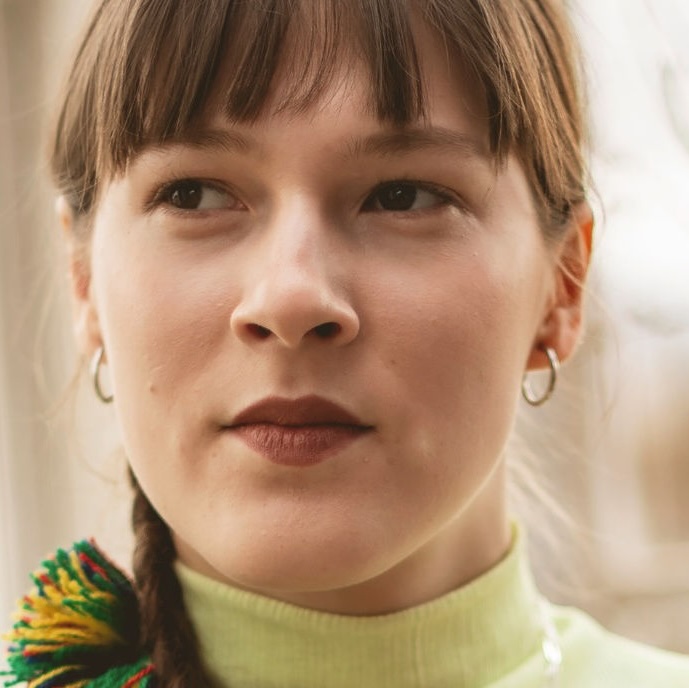
For Barruk, whose brother is a reindeer herder in the Ume Sámi region, close to the Swedish coastal city of Skellefteå, the issues facing the communities were at the forefront of her mind going into the TAKKUUK project. “There are so many stories that I wanted to tell but we only had a short time,” she says of her feature in the film. “I wanted to focus on the voices of the reindeer herders because they live with the consequences of the climate crisis directly, on a daily basis. Living in direct connection with the land and nature, they feel things in a different way than I do as an urban Indigenous person.”
In the film, Barruk returns to her Sámi homeland, to the village of Gajhrege (known as Matsdal in Swedish) where she grew up and where her father still lives. He appears in the film too, speaking eloquently on the importance of language as a witness to nature and to human connection, and how climate change is accelerating language loss among Indigenous communities across the world. It’s a very personal topic for the Barruk family, who are among the last remaining speakers of the critically endangered Ume Sámi language. At one point, Katarina and her brother were the only people of their generation to speak it as their first language, and Barruk has dedicated her life to changing that – not only through her music but also through her teaching and advocacy work in Sámi cultural preservation.
Now 30, she’s already been working as a musician for close to half her life, known for her phenomenal and passionate live shows. With her two albums, 2015’s Báruos (2015) and Ruhttuo (2022), she broke new ground by becoming the first Ume Sámi artist to be played on national radio. More recently, together with composer and musician Arnljot Nordvik, she wrote and released a soundtrack to what is probably the first Ume Sámi theatre piece in a century or more, inspired by and in tribute to her homeland’s forest Sámi culture. “The music I make always stems from the land in some way,” she says. “When I sing, I see and sense the land and the community that I have there, and that makes me feel things in a deeper way.”
For the song “Dárbbuo”, her contribution to TAKKUUK, she stood at the microphone with her eyes closed and pictured in her mind all of the struggles facing the Ume Sámi people trying to keep their ways of living alive. “’Dárbbuo’ means necessity,” she explains. “When I sing ‘We need peace,’ I was thinking of the peace we need to live as human beings according to the Earth’s movements, not against them. All we want is just to live our lives in the way we always have. I also ask in the lyrics for the listener to have the courage to see what my people see, so that one doesn’t need to feel so alone. We live in such an individualistic society, but I think it’s important – now more than ever – for people to show courage, love, and empathy.”

As Barruk’s trailblazing career shows, the arts are one of the most direct ways to keep the Sámi languages and cultures alive. Speaking to me from his grandfather’s home in Kåfjord in the Northern Sámi region of Norway, close to the site of the annual festival of Indigenous culture, Niilas recalls his own story of reconnecting with the culture of his homeland. At the time he first met Barruk in 2016, as part of a collaboration set up by Riddu Riđđu, he wasn’t as personally engaged with Sámi culture in his own music at the time, but he can pinpoint exactly when the turning point came. It was in the early months of the pandemic, that first summer. Having split with a long-term partner, he was living back at his grandfather’s place on Kåfjord, when he got sick with Covid (“something that you absolutely should not do with an old man in the house”) and had no choice but to isolate himself away in one of the rooms with nothing to but “just hang out and read.”
“My grandfather’s house has a lot of objects and literature and art from all around the world, but especially from Sámi culture, and I had a lot of spare time to engage with his library,” he explains, before darting out of shot to retrieve a thick volume by Nils-Aslak Valkeapä – also known by his Sámi name, Áillohaš. “He was one of the great multidisciplinary Sámi artists of the late 20th century, and this book, The Earth, My Mother, is a collection of his art, his poems, and his nature photography. Reading this book gave me a crash course into his world and his craftmanship, and it really helped me to connect the dots and figure out how I could incorporate the concepts and ideas of Sámi culture, and the experiences I’ve had within that, and let those live through the music. And since then it’s gone better and better!”
He's not kidding. When he self-released his debut album Also This Will Change in November 2020, featuring his own Áillohaš-inspired cover art, the response blew him away – not least when he won Norway’s prestigious Spellmannprisen for best electronic album the following spring. Since then he has released four more albums of ambient and experimental dance music under his own name, most recently 2023’s River of Noise, and one with his Locus project, a club-oriented collaboration with Norwegian–Chilean artist GABIFUEGO. Stone Skipping, from 2022, is particularly loaded with Niilas’ own immersion in Sámi culture, even sampling a 1989 recording of a yoik by Valkeapä, who, besides his many other talents, was also a beloved singer. Crucially, the album is as outward-looking as it is nostalgic, with Oslo-based Iranian santoor player Mirsaeed Hosseiny Panah adding otherworldly bloom and colour to many of the songs.
These days Niilas sees himself, along with Barruk and several others, as part of the same generational wave of musicians “defining and exploring the new territories of Sámi art,” rejecting the coloniser playbook of pitting different factions of Indigenous people against each other. “Many of our parents and grandparents have had a really tough time with Sámi culture and art, and that’s led to a lot of… let’s say, infighting… within Sámi communities,” he explains. “Speaking for the newer, younger generations, we are sick of all that. We are sick of groups trying to define who is a ‘true’ Sámi and worthy of wearing the clothing. We just want to be positive about the culture. To back each other up and look to the future.”

It's fitting, then, that his TAKKUUK opening song “Alit” can be read in two ways, either as a Northern Sámi word for blue or as a homonym for the English word ‘alight,’ meaning to take off. “When I heard Bicep’s first demo for the track, it immediately reminded me of a place called Blåisvatnet, or Blue Ice Lake, close to where I am now,” Niilas says, getting up from the sofa to show me the view of the towering Lyngen Alps that feed the lake with meltwater. When he was a kid, the mountains would stay covered in snow for the entire year, even in the heat of July, but these days there’s much less of it.
“We know that the climate of the mountainous areas is changing, but it’s hard to say right now what the consequences of that will be,” he says. “It doesn’t have to be either good or bad, necessarily, but also it could be catastrophic. We just don’t know.”
In a sense, the not knowing is the painful truth at the heart of the climate crisis: we have all the models in the world – none of them good if things don’t drastically improve – but we don’t know the full extent of what humanity’s reckless gamble will bring. It feels so huge, so ungraspable at times. That’s why projects like TAKKUUK feel so valuable, approaching the topic of climate change in a very contemporary and deeply empathetic way, platforming the experience and voices of Indigenous artists with something urgent to say. The languages they sing in may be out of most people’s reach, but the truth of the message belongs to us all.
For Bicep, it’s important that the work gets reflected back to the Indigenous communities that so much of it came from. The coming year will see the film screened at major world cities, but also at cinemas and festivals throughout Greenland, and that’s just the beginning. “It’s hard to say what timeframe to use to measure the impact of a project like this,” says Niilas, when asked to sum up what it all means to him. “All of these unseen butterfly effects can happen, and lead to some really interesting and unexpected results.”
“I can only say, on behalf of me and Katarina, that we are grateful to Bicep for taking the collaboration aspect seriously and being so respectful, involving us in every part of the process. For a big group like them to do a project like this, it normalises collaboration with Indigenous artists and puts us on a professional level where we are not so exoticised, and I think that’s a good thing – a really good thing – for the whole community.”
TAKKUUK is released on 25 July via Ninja Tune. Katarina Barruk appears at the Royal Albert Hall on 31 August as part of this year’s Proms.
Sign up to Best Fit's Substack for regular dispatches from the world of pop culture