

Ben Gibbard's long way home
Three decades into a celebrated career, the Death Cab for Cutie songwriter has abandoned the role of the aggrieved narrator and found a new acceptance of his past and the band's legacy, he tells Kayla Sandiford.
For years, Ben Gibbard has been running. It’s a hobby that he picked up running long distances across the mountain trails in his home state of Washington.
Incidentally, he’s pacing through our conversation. It helps him open up more, as he’s less focused on the stillness of self-examination, but back in 2023, despite having multiple marathons under his belt, the then 46-year-old Gibbard found that there is a limit to what you can outrun. “I had been training for this one-hundred-mile race that my friend and I were going to run together,” he tells me. “I was in the best shape I’d been in for a long time. I wasn’t worried about finishing the race. But halfway through, I just became so exhausted. I pulled off to the side of the trail and started heave-crying, and I didn’t know why.”
At this point, the Death Cab for Cutie vocalist found himself entrenched in a period of personal collapse. He was working through his second divorce, and on that trail, an influx of feelings that he tried to suppress were finally beginning to surface.
“You can run on anger, you can run on joy, but you can’t run on grief,” is what a friend told Gibbard.
“I had been compartmentalising how painful this was,” he admits. “I was telling people, ‘Oh no, it’s for the best, we’re gonna be fine’. And then all of a sudden, it just comes pouring out. I was expecting to finish Cascade Crest with my friend, hand-in-hand, but I’m driving home at the halfway point because I’m absolutely destroyed. Grief is very strange in that way, because it just sucks the life out of you.”
For Gibbard, the method for managing grief was construction. Managing his life is a careful, architectural process: “I started to think about my life as a skyline,” he explains. “I look out at the skyline of Seattle, and there are different-sized buildings of varying prominence and importance. That big skyscraper is the band, or something like that. And all of the memories from the band live in that building. A smaller building might be a relationship from my 20s that I was for a year or so with a person that I don’t really talk to anymore, but I have memories from them.”
“You compartmentalise all these memories in these buildings so they’re not out in the street, yelling at you 24/7,” he continues. “You can go in the building and live with those memories for a while, revel in past experiences, the good times, the bad times, but at the end of the day, you can shut the door.”

Looking at his own glimmering skyline, Gibbard realised that some level of reinforcement was required to contain the pain that left him blindsided with Cascade Crest in the rear-view – a stronger structure that would allow him to move on without cracking under the strain of loss. This led to the creation of the tower, a mental fortress built solely for protection, a process that went on to inspire Death Cab For Cutie’s eleventh album, I Built You A Tower, released next week.
To some degree, this was an act of necessity. 2023 was a big year for the Bellingham-born band. They were celebrating the 20th anniversary of their seminal fourth album, Transatlanticism, while at the same time, Gibbard was marking the 20th anniversary of The Postal Service’s sole record, Give Up, and preparing to embark on a sixteen-month co-headlining tour for both bands across North America and Europe in support of the milestone. Night after night, Gibbard found himself fronting two projects, regularly inhabiting headspaces of past versions of himself.
“I was on the road doing Death Cab and Postal Service at the height of some of the worst of this separation,” he admits. “And I would have to set aside this stuff that was happening in my real life to go live my 26-year-old life for two hours, so there was a lot of context switching to do my job.”
A standard Death Cab For Cutie show would involve what Gibbard describes as “quantum leaping” through his life. With the band’s catalogue dating back to their 1998 debut Something About Airplanes, released on Seattle-based independent label Barsuk Records (itself preceded by Gibbard’s demo cassette You Can Play These Songs With Chords in 1997), they jump between songs written decades apart. With a focus on Transatlanticism, a now 49-year-old Gibbard was confronted more directly with his mid-twenties mindset.
“There are songs on there that I would not write today,” he reflects. “Or if I wanted to write about a particular moment, I would do it differently now. I'd like to think that I've developed some emotional intelligence as I’ve gotten older. While I’m sure some people might prefer the old lyrics, I hope that I’ve gotten better as a lyricist, because I have a better vocabulary.”
Fundamentally, Transatlanticism is a break-up album. It captures the steadily growing emotional gap between long-distance lovers in what feels like a perfect chronology, from painful cycles, the enduring friction of space, and the agonising plea of “I need you so much closer” repeated within the record’s epic title track. Its timeless resonance is established enough for Gibbard to joke about THAT inevitable Transatlanticism phase in college, but when he looks back at his early work, he recognises an imbalance in the portrayal of the narrator’s plights.

“I think that there are moments in our discography in which the narrator feels aggrieved in some way,” he explains. “Something has been done to the narrator, who was usually me. And the narrator is expressing a grievance and pointing a finger a little bit in varying ways. Some times are more aggressive than others, but being in my late forties and going through a second divorce, I just don’t think there’s much more to be done for me. There’s nothing more to accomplish with writing songs from an aggrieved place.”
Gibbard recognises this as a product of his own maturity, and the ultimate realisation that the stakes change with age. “I've just come to the conclusion in my life that I was a willing participant in this relationship, and I made mistakes, and I could have done things better,” he tells me. “So, it would be immature for me to write about this experience as though I am just a mere victim in my own sadness.”
“I didn’t want to write another break-up record, because writing a break-up album when you’re 48 is kind of different from when you’re 26,” he continues. “When you’re dating someone and you break up, that’s painful. But marriage and middle age are entirely different, and I wanted to write about this more internal place rather than a book report on the dissolution of my marriage. I wanted to write about how I was reacting to it, and the conflicting emotions that come up from it.”
Across I Built You A Tower, Gibbard adheres to this intention. The title alone suggests a sort of safekeeping rather than any vindication, but looking beyond its practical purpose, Gibbard seems to move through the metaphysical connotations of what a tower represents: the disruption of old structures to incite necessary change, the realisation that destruction facilitates growth.
Opener “Full of Stars” begins with a gentle ask for forgiveness against a melancholic acoustic guitar melody as Gibbard acknowledges an insurmountable hurdle of dissatisfaction. By contrast, single “Punching for Flowers” bares the brash tendencies of the narrator openly against heavy, frenetic guitar riffs that lead into a confronting final verse: “Words were sharpened like axes / And he swung them blindly around / With no regard for the dangers / And slashed her to the ground / And I’m not sure which is worse / If God laughs or he doesn’t / And I’m not sure which is worse / If it was love or it wasn’t.”
It’s an immediate depiction of the inner journey that Gibbard weaves through, holding up a mirror and getting honest with the reflection.
"I think you can do fan service without being overly nostalgic. I’ve seen enough people that I really admire do those kinds of things, and they’re still making work that I feel is vital, important, and creative."
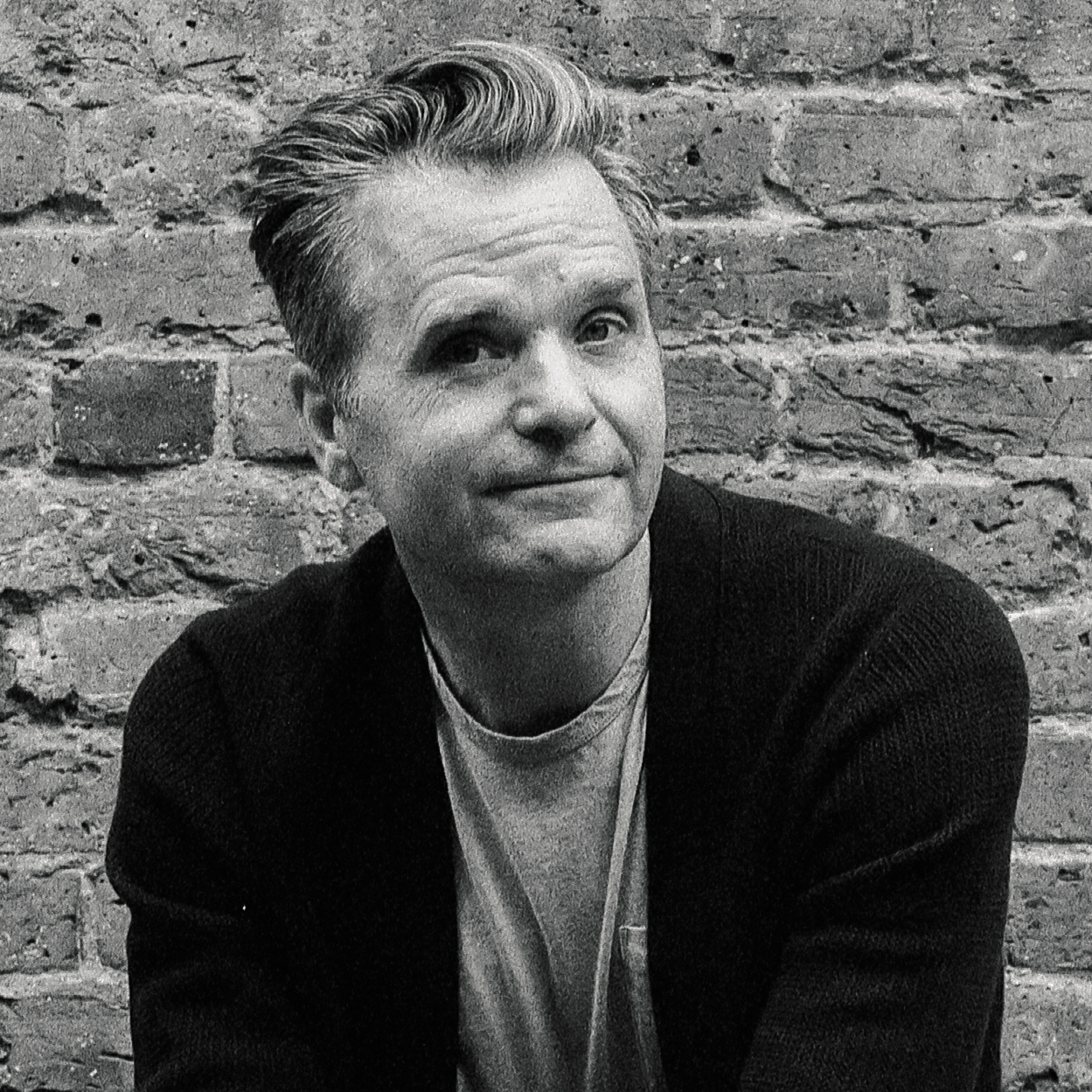
Ultimately, embarking on something of a “nostalgia trip” lent itself to the creation of the album. As guitarist and keyboardist Dave Depper expressed in an earlier statement: “The anniversary tours exorcised any nostalgia in our systems.” It left them with a desire to capture something new – in this instance, a deeper, more introspective and nuanced approach to songwriting for Gibbard – and appreciate the experience of simply being musicians in a room who enjoy making music together.
“I think you can do fan service without being overly nostalgic,” Gibbard says of the anniversary tour. “I’ve seen enough people that I really admire do those kinds of things, and they’re still making work that I feel is vital, important, and creative.”
Gibbard specifically recalls a night in London back in 2011 when he went to see The Cure with bassist Nick Harmer at the Royal Albert Hall as a good example of how to honour the hits without losing yourself to them. “They had a two or three-night stint where they were playing their first three records in their entirety, and it was fucking awesome,” Gibbard muses. “They played those records in their entirety, all of the B-sides, and it was a totally unedited experience of fan service. It’s entirely acceptable and possible to honour your own history without devolving into just a touring act that plays the hits. For us, they’ve been a lesson in how to do that.”
With that reference point, the band are careful not to get caught up in reminiscing. Last year, they celebrated yet another milestone: the 20th anniversary of major-label debut Plans and commemorated the occasion with a short US tour that included shows in Seattle, Chicago, and Brooklyn. This all took place while they were working on I Built You A Tower, and by then, they were ready to move earnestly forward.
“We were rehearsing just last week, and I turned to Nick, and was like, ‘God, I’m so fucking psyched to be playing new songs’,” Gibbard says with excitement and relief. “We had this conversation where we decided that if this turns into just playing old songs to go make money, I don’t want to do this anymore.”

With the Plans anniversary behind them, the decision feels timely. The band’s fifth album was a major turning point; their first release on Atlantic Records after four records with Barsuk, it went platinum and landed them their first GRAMMY nominations. Their deal lasted twenty years and saw them release six more albums on the label but it wasn’t until recently that Gibbard started describing his job as a ‘career’.
“I’ve gotten to a place where I’ve realised that it is rare for anyone to make something that has even a small semblance of impact in the world, because the world is a massive place,” he explains. “To have written a song, let alone multiple records that have been meaningful to people, it’s incredibly humbling.”
Considering Gibbard is in conversation with The Line of Best Fit – itself named after the closing track on Something About Airplanes – it feels as though the impact of the music is undersold. When I tell him this, he laughs: “It is so indie rock to choose the deepest cut on the first record by a band as the name of something," he tells me. "Indie culture has a way of going as obscure as humanly possible.”
He attributes acceptance of his work as an honest career to fixating less on the destination and willing himself to let the journey carry him forward, something that he particularly admires about producer and former Death Cab for Cutie guitarist/songwriter Chris Walla, who left the band in 2014.
“I turn fifty this year, and I’ve spent a lot of my life wondering where things are going,” Gibbard admits. “I’ve had an unhealthy fixation on the destination, but I’ve been fortunate enough to be partnered with people like Chris Walla. He’s a journey guy. As a producer, he wants to be in the studio just futzing around with stuff, and I would get frustrated at times because I wanted to know where we were going. But what I didn’t realise was that I needed the journey person as a foil to my destination person, because things would not have turned out as great as they did.”
Looking back at the past thirty years as a musician, Gibbard now understands that the destinations he envisioned were simply “mile markers on a highway”. He shrugs it off and laughs: “You’ve got to understand, it was 1996! The bands that meant the most to us were bands that you’d talk to at the merch table, and find out they were teaching adjunct at the University of Texas, and they were off for the summer. That’s why Bedhead were in Seattle.”
“Indie rock was a style that was at best a detour in your life,” Gibbard continues. “If things were going amazingly, this would be a five- or seven-year detour away from a more traditional career. That idea has been so ingrained in my thinking from such a young age. But I’d like to hope that I’ve developed a healthy relationship with the concept of a musical legacy.”


Sometimes, maintaining a legacy requires doing things a little bit differently. For I Built You A Tower, Death Cab for Cutie stepped away from Atlantic and signed to ANTI-, marking a return to their indie label roots.
Being signed to a major for the better part of their career allowed Death Cab to grow beyond what they thought they could become as a new band in Bellingham in the 90s, but the timing also mattered. By the time they joined Atlantic, they'd already sold hundreds of thousands of records in the United States, with Transatlanticism nearing Gold certification. “In industry terms, it’s kind of been said that the first 100,000 records are the hardest to sell, at least back in 2004,” Gibbard explains. “That work was already done. So we came into a major label having shown that we could make music that didn’t fit into a formula, and people would respond to it.”
While he humorously notes not to ask “Old Man Gibbs” for advice on the industry, Gibbard is quick to acknowledge the presence of “evil motherfuckers” within major label spaces. Despite this, for the entire duration of the band’s time on Atlantic, Death Cab retained the same supportive team. “They were people who really believed in what we were doing, and we were never interfered with. No one ever showed up in the studio trying to get us to do some embarrassing feature or co-write.”
The band had clear-cut support and creative freedom but Gibbard also acknowledges a subconscious pressure to make something fit for commercial response: “It wasn’t so much that I was going into my studio thinking that I had to write a hit single, but we were on a major label, and up until recently, radio was one of the main reasons we were signed to Atlantic,” Gibbard explains. “Music from our world wasn’t getting played on alternative radio in 2003 and 2004, and we wanted to see what could happen. Maybe we could get a larger audience. So, I think that mentality seeped in. But being back on an indie, I feel more liberated from it.”

Leaving Atlantic wasn’t exactly premeditated. Death Cab had signed for one more album with the label but days after their contract was delicered, Atlantic Music Group chair Julie Greenwald – with the band from the very beginning – announced she'd be stepping down. With their original team fractured, Death Cab decided to follow suit. “There are stereotypes that we have, and stories we tell each other about indies and majors, but I’ve felt incredibly connected to the ‘suits’ at a major label more than I ever thought I would,” Gibbard reveals. “It’s about the relationships you form and the people you choose to be in business with, because whether you’re putting records out on an indie label or a major label, it’s a business.”
Without the looming pressure of major expectations, the band are now working with more breathing room at ANTI-. When Gibbard looks back at the music Death Cab released over the years, the limitations he faced in his own work come into clear view. He views his early songcraft as “closer to the surface”, referring to “405” on We Have the Facts and We’re Voting Yes as a specific example, laying it out plainly: “I dated this girl for a couple of months, we broke up, I was sad. It is unequivocally a song written by a 20-year-old. That’s not to say that 20-year-olds can’t write great songs, but at that time, capturing the surface was just enough.”
Even reflecting on albums from the last decade, there’s a sense of incompleteness. This was particularly the case for Codes and Keys and Kintsugi: “The only time I got off my game, so to speak, or that I really started to shift how I was writing, was when I was living in Los Angeles and Zooey and I were together,” Gibbard admits. “I started to hold back.”
He's referring to his time with actress Zooey Deschanel, who Gibbard married in 2009. They were together for two years before announcing their separation in 2011 and divorcing in 2012. The change in Gibbard’s writing came not from the breakdown of the relationship, but from being directly in the public eye. “I found that when I was living with a famous person, and arguably as recognisable as I’d ever been in my life, I was retreating a bit,” he admits. “It’s not that I didn’t want to share, but I was fearful of what people would think. It was the first time in my life that I wrote from a place of fear.”
Consequently, Gibbard regards Codes and Keys as Death Cab for Cutie’s worst record (though, he gives it some praise for having a few good songs). In addition to writing from a place of retreat, he found inspiration in Randy Newman, and was making an effort to write using less language. “I’ve learned that’s just not my forte,” he tells me. “In hindsight, I really betrayed the spirit of what makes the music that I write work. I was overly conscious about how the work would be interpreted.”
"Nothing is going to supplant Transatlanticism. This deep into a career, our goal is to just make the best record we possibly can, and remind people who have been fans why they love the band."
Similarly, he felt the songs on Kintsugi simply weren’t as whole as they could have been when brought to the studio, somewhat compromising the structure of an album inspired by the concept of breakage and repair. “I was bringing songs that weren’t really complete, and then trying to find studio trickery to make them interesting,” he says.
It’s a stark difference to where Death Cab for Cutie are at with I Built You A Tower. While making Asphalt Meadows, their previous album, Gibbard started exploring digitised four-track masters captured back in 1996, returning to the basics and deconstructing songs he wrote thirty years ago to repurpose with fresh eyes. “I started recording myself playing drums a lot, and making my own loops,” Gibbard tells me. “And I also had this big library of me playing drums in my style, which was perennially frozen in the 90s, and I started writing on top of that. My hand started going to places on the guitar or on the bass that felt familiar, like a return to form. But it also felt fresh, because it had been so long since I’d taken this approach to songwriting."
When it came to recording I Built You A Tower, the songs already sounded complete on the demos and the band were growing more confident in the idea of less being more: “We’re not going to do that thing where we come up with a guitar part, and we double it and triple it on three other instruments. If we don’t have a part to play in the verse, just don’t play anything.”
Although this is only the third album made with the current iteration of Death Cab – Gibbard, Hamner, drummer Jason McGerr, Depper, and multi-instrumentalist Zac Rae – they’ve found a rhythm as a five-piece that allows them to understand the impact of space in the songs. With these confident, integrated methods underpinning the band’s process, the eleven tracks on I Built You A Tower stand tall, most strikingly on the record's title track, which comes in two versions: an A-side with a pining glimmer, and a B-side that closes the album with harsher, ominous instrumentation. It’s rough like the rubble of a crumbling foundation, but retreats just in time for Gibbard to sing clearly, “I’m learning how to / Live without you / But these ruminations / Are all about you”.

Despite a calculated effort to maintain protective walls, much of the true connection that exists within Death Cab for Cutie’s music comes from the moments where emotion seeps out through sonic frissons. These instances only grow stronger as Gibbard continues to unlock parts of himself and find closure within, a process that he attributes both to time and to therapy.
“This was three years ago, and I’ve worked through it,” Gibbard explains. “Any painful moments, you carry them through the rest of your life. But I’m not about to jump off of a building. I’m in a really good place right now, and I’m fortunate for that. Having a consistent relationship with a therapist for the first time has been really helpful in giving me perspective to so much in my life. It’s unlocked a way of looking at the world that has allowed me to write from a slightly different place.”
As Gibbard sheds the role of the wounded, affected narrator, he embodies a character more concerned with progressing through understanding rather than being victimised by his own experience. So when he admits exhaustion as he scrambles to hold himself together on “Riptides”, spins his rumination into self-protection on “Pep Talks”, and asks questions with no complete answers throughout the course of I Built You A Tower, it’s with the confessional sincerity of the songwriter who never expected his words to reach thousands of ears nearly three decades ago. It turns Gibbard’s inward search for closure into an unintentionally outstretched hand.
At this stage, he's realistic about just how far he can reach. “Nothing is going to supplant Transatlanticism,” he tells me knowingly. Not in a defeatist way, but with a sense of acceptance. “I’ve often said that this deep into a career, our goal is to just make the best record we possibly can, and remind people who have been fans why they love the band.”
From where Death Cab For Cutie stand now, the best reminder doesn’t seem to come from reopening old wounds, running away from them, or even building around them. It’s taking a chance on learning how to heal and move forward when the time feels right.
Sign up to Best Fit's Substack for regular dispatches from the world of pop culture