Finnish at heart, global in ambition, Flow looks to the future
Additional Photography by Konstantin Kondrukhov and Samuel Pentti
At Flow Festival in Helsinki, Finland’s homegrown artists are taking up more space and doing it on their own terms, as Alan Pedder finds out
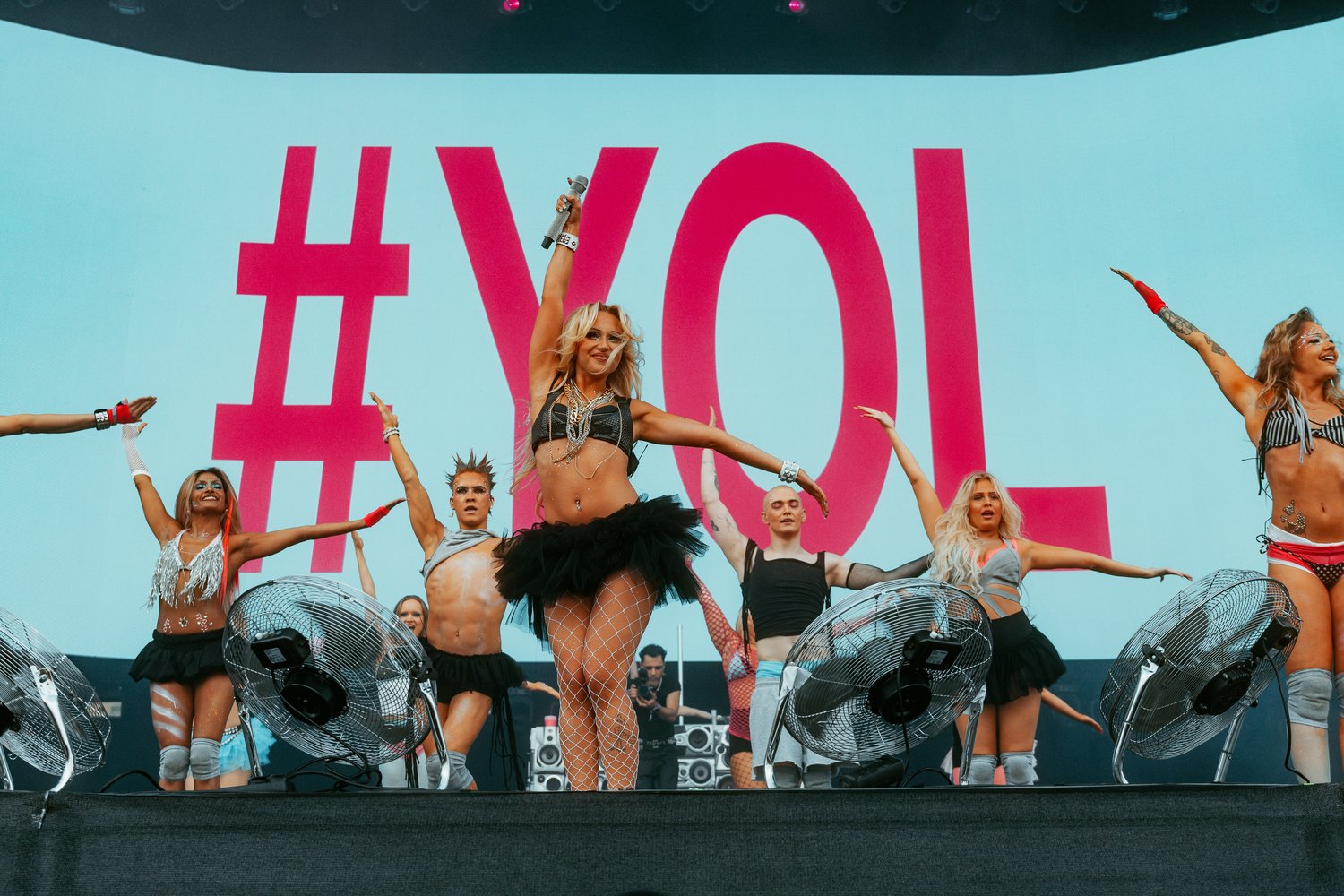
Two weeks before stepping on the main stage at Suvilahti, Olga Heikkala took her first ever pole dancing class.
Already months into rehearsals, the Gen Z soap star turned Finnish-language banger magnet had decided that the show was missing one last dash of spice. Having won a fight to hire twenty dancers for the set, the math, as they say, was still not quite mathing. “I was, like, of course I’m gonna have a solo part,” she says, laughing – and to her credit, despite the understandable nerves, she unequivocally smashed it.
Rooted in the school of What Would Lady Gaga Do, Heikkala’s gnostic pop ambition has taken her far in just a short whisker of time. It’s a rare feat to get booked for Flow, Finland’s flagship music festival, two years on the trot, let alone go from mid-size tent to its largest stage in one bedazzled leap. “I was so shook when I found out,” she says. “I knew then that this had to be the best show of my life, the biggest show in Finland, and I needed to give it my all.”
A few hundred feet away, Alec Moborg (aka Louie Blue) is playing out his own version of ambition. It may be a smaller stage than the one on which he debuted here four years ago, but the Finnish-Italian singer/songwriter is a different artist these days, and a better one too, having overhauled his sound and overall approach to find a truer, more sincere voice. Leading his band confidently through a sturdy set of vintage soft rock, big on melody and, in a Flow exclusive double-drummer setup, even bigger on the beat, it’s a fitting way to celebrate the triumph of his comeback.
“Oh man, that was surreal,” he tells me later. “It was like a dream come true. I’m always nervous about performing, but I feel like playing to 1000+ is so over the top and not what I am used to that it kind of soothes me. I felt weirdly quite relaxed.”
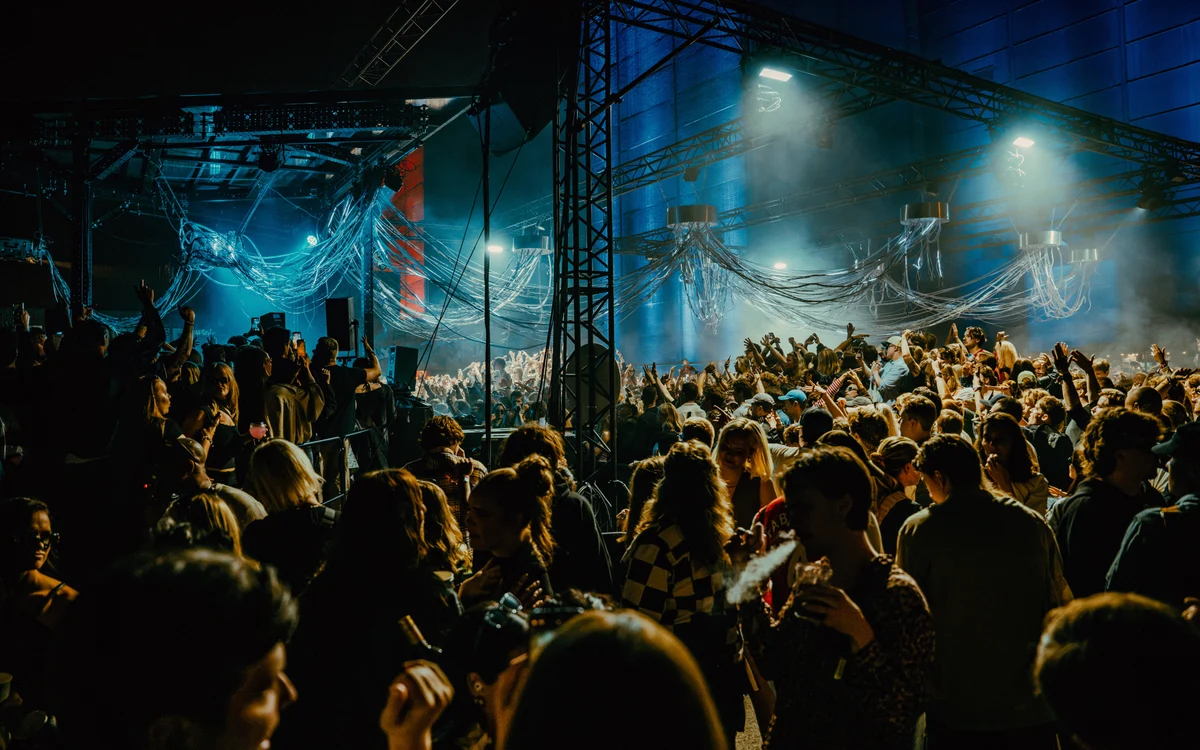
It’s almost too neat to think about the contrasts here as something more indicative of Flow’s broader ethos but hear me out. The last time I came here, for the 2024 edition, it was clear that Finland had a shortfall of perception rather than of world-class musicians, and that Flow, in quite a natural, unforced way, was part of the effort to change that. Two years later, my curiosity has shifted, from how to get the world to pay attention, to how Flow’s global outlook itself feeds back into the wider Finnish music scene. After more than 20 years of bringing the world’s best bands and brightest stars to Helsinki, how much has Flow made the city feel like a stage from which the world can be addressed?
I’m not sure what I would have answered in 2024, but the ceiling for a homegrown act does, I think, feel higher now. Flow has never had a Finnish headliner, at least since setting up at Suvilahti in 2007, but at the risk of overselling how far she has come, Heikkala’s big swing could make it seem like less of a long shot.
Having grown up in the Finnish far north, her only real access to festivals as a kid was through television and, later, YouTube, so it makes sense that she looks back on the Flow set as like watching herself in a dream. Even a technical mishap couldn’t break the spell, and of all the many high points, she says, it was the party hit “#1 Bämä” (bämä = baddie) that brought her closest to tears.
“I got a lot of hate when I first started out,” she explains. “I was so intent on being a popstar and acting like a popstar, and everyone got mad. But then I made that song and realised, ‘Fuck, I don’t want to stop.’ So to sing that song in front of I don’t know how many people, 10,000 or more, it felt so emotional. I almost gave this up, and now I’m here.”
Where Heikkala succeeded by giving herself permission to be “too much,” Moborg did the same in allowing himself to be different. He sings in English, makes music that’s more retro than modern, and admits to sometimes feeling self-conscious about it when playing in Finland – but not at Flow. “It just hit me different,” he says, pointing to a moment in the set, during the slower song “Get it Back,” when it felt like the whole crowd was one big family, holding up their phones with flashlights on. “That almost actually made me cry,” he says. “I was just so happy about getting a response that I’m not used to.”
Stealing some time with Flow’s new CEO Katariina Uusitupa, who took the reins in January, it’s interesting to learn that, for all its international reach, Flow has actually become more Finnish rather than less. Attendees from abroad now make up less than 10% of the crowd, down from around 15%, partly due, she suggests, to a fear of Russian aggression. Not that the festival is suffering for it; this year, across the three days, a record-breaking 91,000 people pass through the gates. But it does explain why Flow feels, in Uusitupa’s words, “more Helsinki based” than it did before.
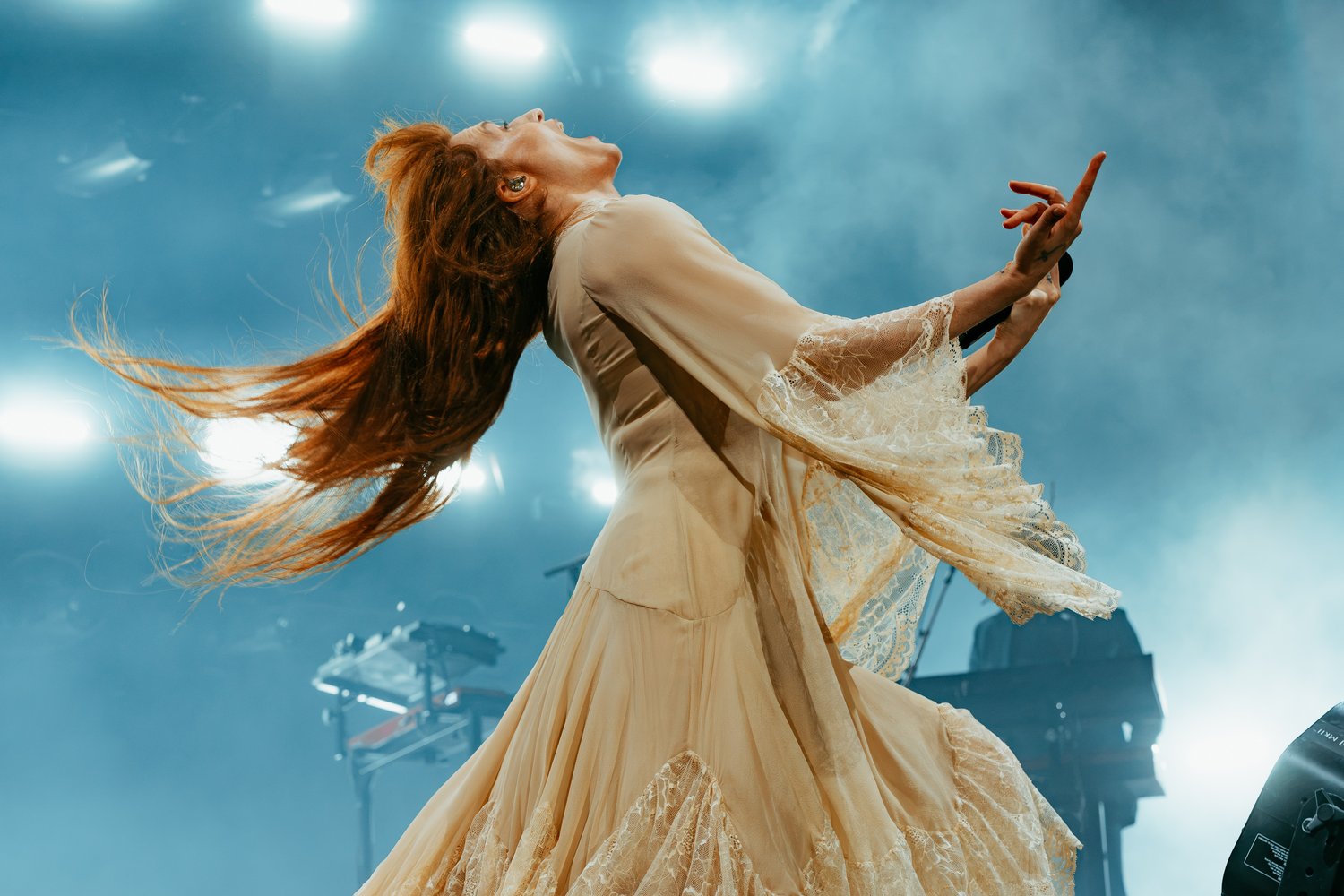
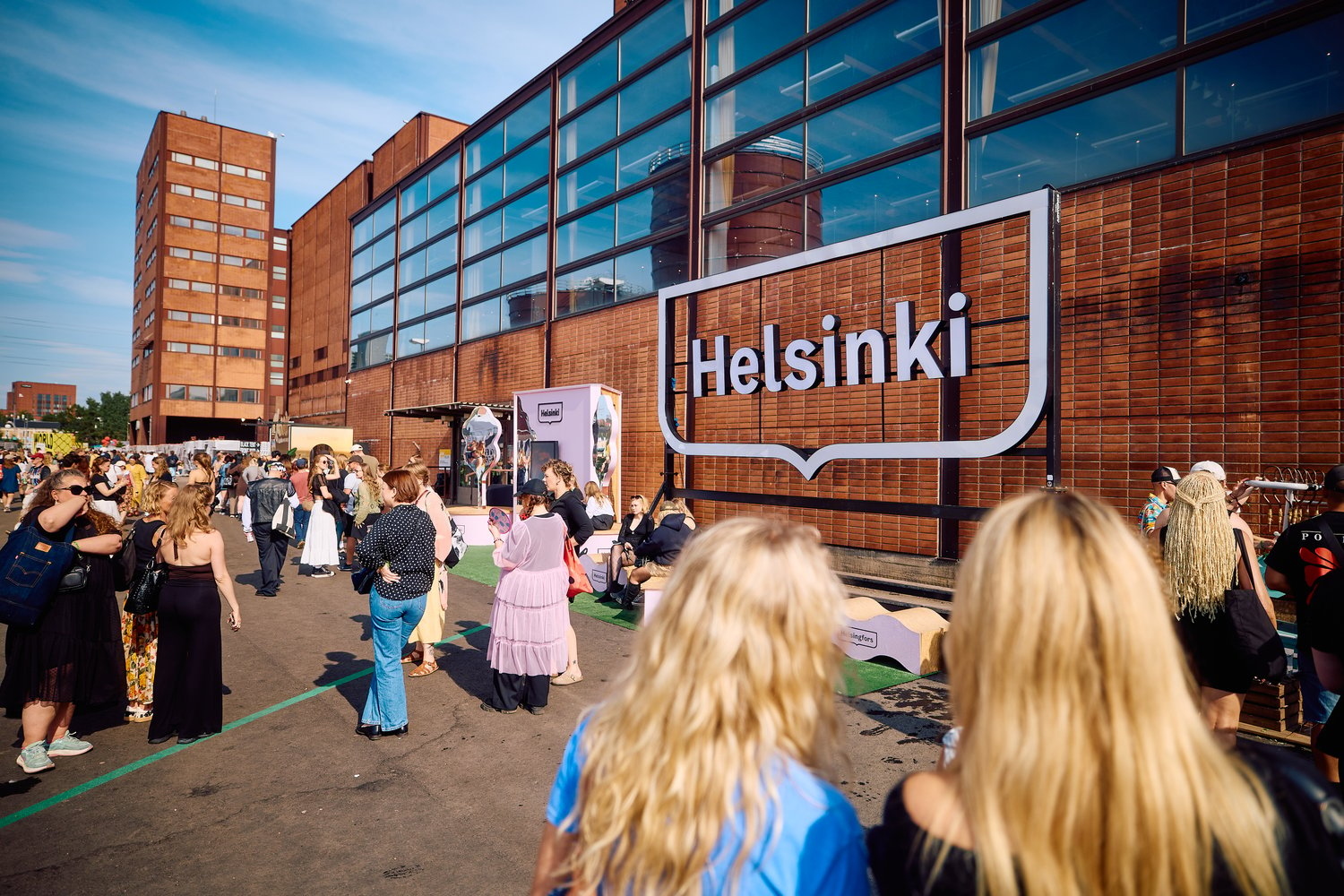
Of course, the city hasn’t exactly been incidental before now. One of Flow’s many perks is that it takes place right in the heart of Helsinki’s east side, in a unique post-industrial landscape with its redbrick smokestacks, gasometers, and Jugendstil buildings once part of a now decommissioned power plant. The city feels connected in a way that other festivals often lack. “It’s not just a field,” Uusitupa says. “There’s so much history here.”
Where the words ‘new CEO’ might strike a little fear into the hearts of festival lifers, in this case Flow has passed into careful and experienced hands. Uusitupa’s connection to Flow goes back almost as far as its move to Suvilahti, having started there as a volunteer in 2008, moving through assistant, partner producer, and production manager roles before being given the keys to the kingdom.
Her first focus, she says, was on tidying up some of the grey areas in the organisational structure, setting clearer goals to better meet the overall ambition that everyone shares, to make Flow the best event it can be. “I’m not a huge fan of hierarchy,” she says. “I always tell people that it’s not ‘my job’ and ‘your job,’ we’re doing this together.”
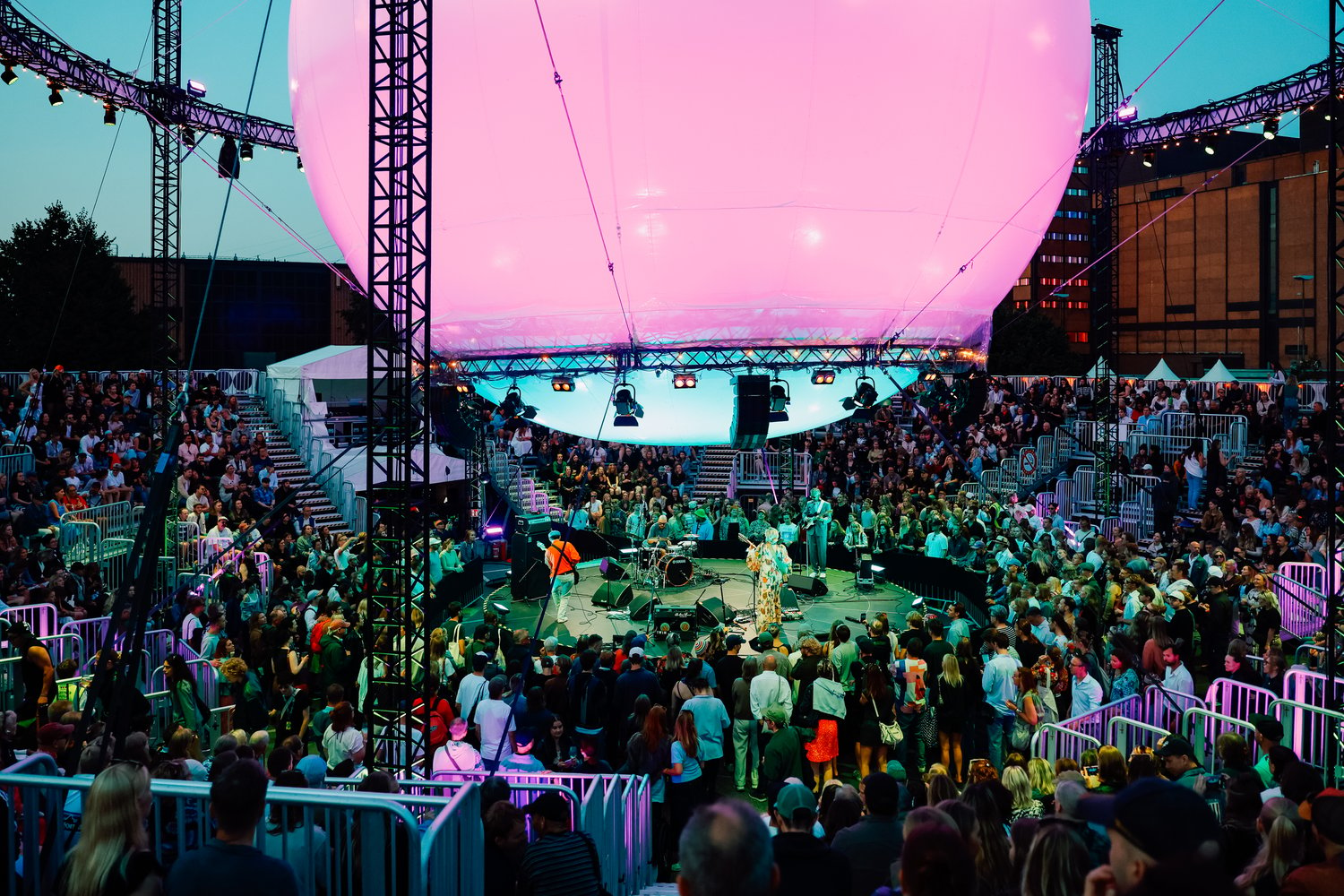
The most obvious change from two years ago is that the layout has changed. Where the magical Balloon 360 stage once felt like an outlier, tucked away on its own by the entrance, it now has two new neighbours: the relocated Black Tent, Flow’s third biggest stage, and the electronic music area Front Yard, made much bigger and more impressive, now homed within a spiral of twenty or more shipping containers. Experimental music stage The Other Sound has moved too, into a larger, more atmospheric space that really helps the programming come alive.
Uusitupa’s worry that that new site of the Black Tent might mean make it harder to find proved unfounded – the Louie Blue show wasn’t the only one totally packed – but of course I overheard complaints, some more valid than others. Despite being planned out through extensive 3D modelling of crowd movement, it’s fair to say that Flow really should have widened the passage between the two main areas of the site, and I hope that gets fixed for next year. I’m not the only one who noticed some Finns being weirdly aggressive moving through the crowd, frustrated by the bottleneck to get where they wanted to go.
Having grown out of the Helsinki club scene, where it started in 2004, Flow has always drawn a fashion-forward, gender diverse crowd, and the festival’s almost utopic sense of “an equal, safe space where everyone is loved and seen,” as Uusitupa sees it, is part of its broader appeal, something she would want to preserve even if Flow ends up needing to move. For years now, the elephant in the room has been the city’s plans to redevelop the Suvilahti site into a permanent, gigantic event hub, forcing out many of its current residents, including Flow. “I’m really fighting for this venue,” she says with some bite. “And if we’re still here in 5 years that would make me really proud.”
For now, though, on the ground, there’s very little sense of a festival in limbo. Despite the circulation hiccups, this year’s Flow feels perfectly assured. Previous headliners Florence + The Machine and Nick Cave & The Bad Seeds are back in a big way, drawing huge and deeply invested crowds, while Swedish candy coloured popstar Zara Larsson proves the perfect fit for a Friday night, giving the crowd exactly what they wanted.
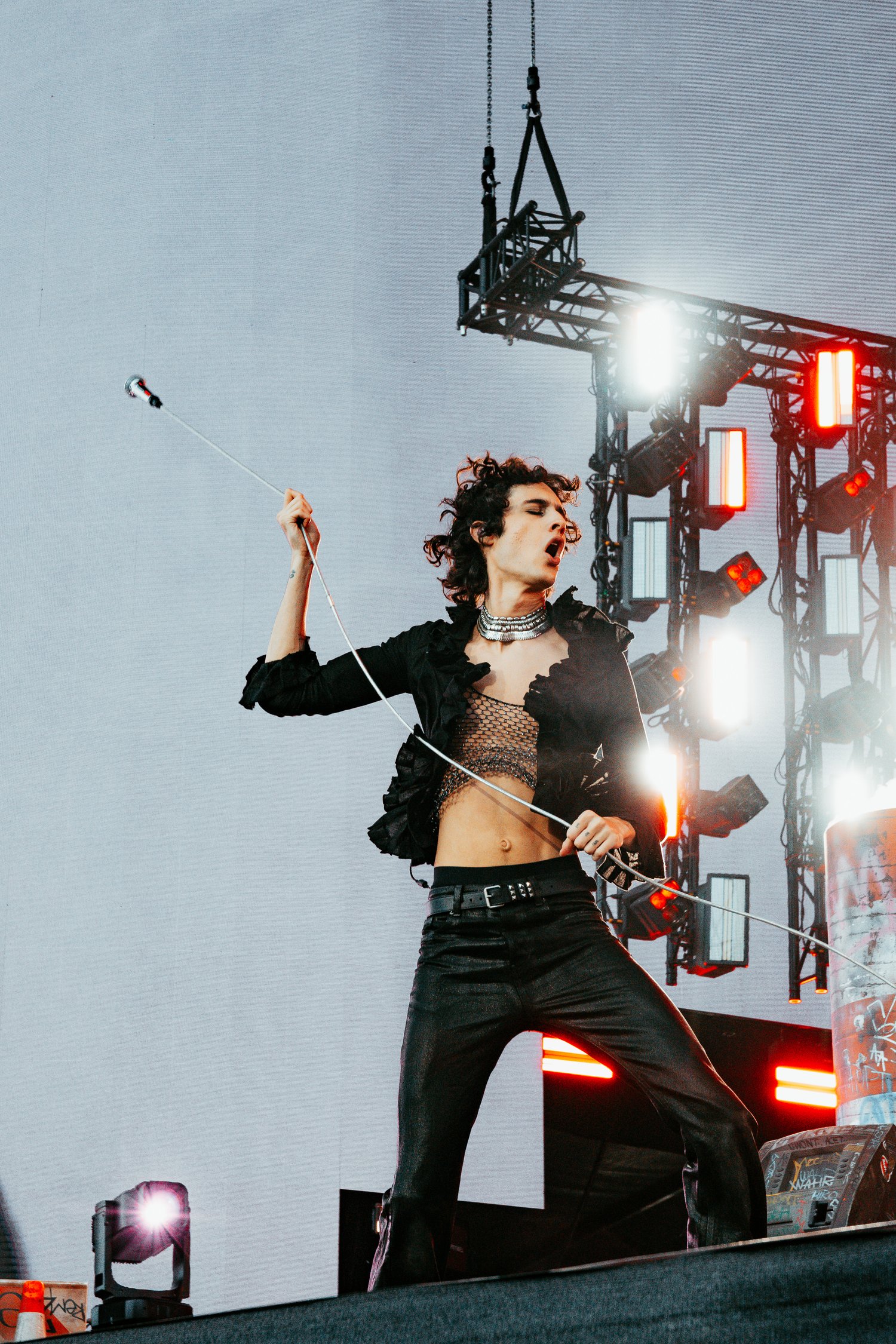
It may be Larsson’s first time at Flow but not in Finland, making Sombr, the loose-limbed 21-year-old from NYC, the most awaited Finnish debut of the festival. Credit where it’s due, his stagecraft is fully on point, but the songs are less so, with the ploddingly derivative “I Wish I Knew How to Quit You” being the worst of the duds.

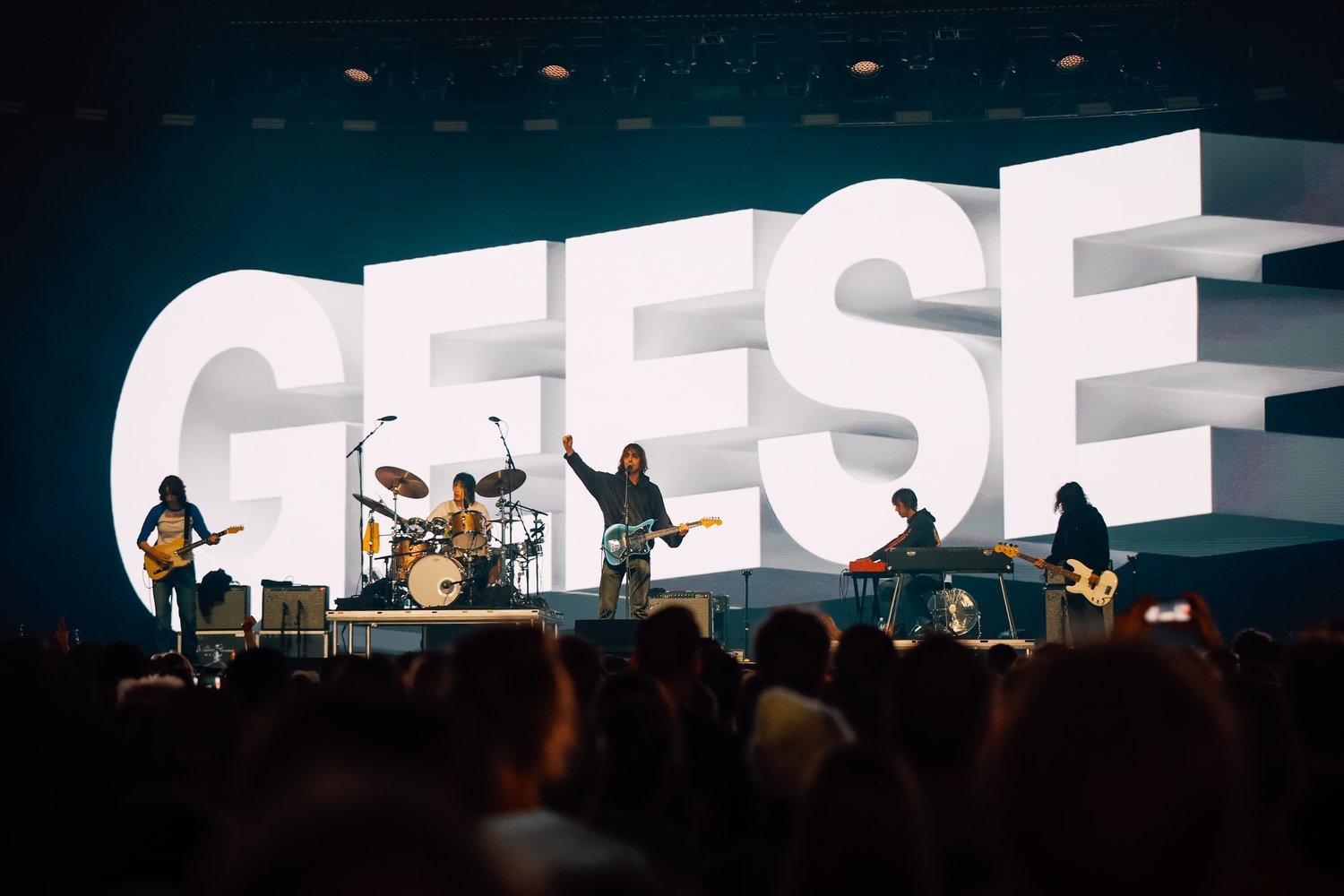
While this year’s Flow is pretty light on international rap acts (Clipse being the major exception), homegrown hip-hop artists Ibe, Ares, and Keiju prove that they can more than hold their own. Even shrouded in the fog of ungodly amounts of dry ice, Ibe’s intriguingly choreographed main stage performance feels like it hits a nerve with the crowd. Elsewhere, representing heavier music this year are Turnstile on the main stage and British punks Lambrini Girls, who tear a figurative hole in the Black Tent, while, at the artsier end of the spectrum, the overhyped Geese pack out the Silver Arena but don’t seem to live up to the moment.
Pop icon Lykke Li fares much better in the same space, hitting her mark with a stack of gems like “Get Some”, “sex money feelings die”, and, of course, “I Follow Rivers”, which goes off like it’s still 2011. Over on the main stage, Welsh export Marina makes the most of what turns out to be the final show of her Princess of Power tour, with Electra Heart cut “Primadonna” a clear smash hit with the crowd.
On the more vibey side, Oklou makes a strong impression with her Finnish debut (“Harvest Sky” forever), while Rochelle Jordan had the misfortune to clash with Clipse but still brings her A game to one of the year’s most velvety performances, smoldering and glamorous, but also pure club.

Across the four different dance stages, I particularly love the Berlin-based Awesome Tapes from Africa and Habibi Funk sets, while Honey Dijon and a DJ set from Disclosure are perhaps the year’s biggest draws. But, to the surprise of no one who read my last Flow writeup, it’s the Balloon 360 stage that delivers most of my personal highlights.
Brazil’s Ana Frango Elétrico are up against Zara Larsson on the schedule, but a capacity crowd is soon drawn in by Frango’s bouncy, irresistible charm and the flawless backing of her band. The Crystal Waters sampling “Não Tem Nada Não” from the band’s most recent 7” is a particular gem, as is the silly, buoyant “Electric Fish”. Swedish band Dina Ögon, fronted by Anna Ahnlund, are equally magnetic, and seemingly more loved in Helsinki than they’d anticipated. When they say they want to come back soon, you can tell they really mean it.
Other balloon bests are Tyler Ballgame with his phenomenal stage presence, Hannah Cohen on surprisingly dynamic form, and South Korean punk band Sailor Honeymoon, who put on an energetic, sweetly unhinged, and very loud finale. My first time seeing a mosh pit form at this stage, and I hope that it won’t be the last.

With so much else going on I don’t get to spend as much time at The Other Sound as I would have liked to, but I couldn’t miss Kiri Ra!, the recently revived trio of experimental psych-folk artist Laura Naukkarinen (aka Lau Nau), jazz saxophonist Linda Fredriksson, and Swedish keyboardist Matti Bye. They’re flawless, as expected, with Naukkarinen’s wordless vocals swimming through the sound design, elegant, arcadian, and utterly lovely.
Expanding from a duo to a five-piece band for Flow, Helsinki’s own ƒourest are just as engrossing, ping-ponging between noisy electronics and atmospheric ambient sounds with cello, violin, clarinet, and, it has to be said, a little too much rainstick. Also worth mentioning is More Ohr Less Trio, because where else but Flow could you see Anna von Hausswolff’s dad performing with the son of Charlie Chaplin and a 91-year-old Krautrock legend (Hans-Joachim Roedelius) as a warm-up, of sorts, for Zara Larsson?
From the Finnish soul grooves of festival opener Emilia Sisco & The Northern Lights (very good) through to Nick Cave’s closing bawler “Into My Arms” (transcendent), Flow never falters in bringing its vision to life. Finnish at heart, global in ambition, it pushes its homegrown artists to think bigger, like Heikkala insisting on her big pole dance moment, or Moborg leaning into the idea that simply being different is no reason to play small.
Flow Festival returns to Helsinki on 13–15 August 2027. Tickets are on sale now.
Sign up to Best Fit's Substack for regular dispatches from the world of pop culture